
Evaluating the Results of Giving
By Bill Leon, Ph.D., AVI-USA Board Secretary
What?
So What?
Now What?
“What?”, “So What?” and “Now What?”are the key questions AVI-USA is discussing with all Auroville International USA partners. They are part of our evaluation process for all AV units that receive funding through AVI-USA. As an organization responsible to donors, the partners, the people they serve, and the legal and administrative systems in which we work, we are implementing a deep reflection and accountability process that allows us to see and hear what the people working in AV and the bio-region are “doing” and what they are “accomplishing.”
As a professional evaluator with my own firm (Geo Education & Research), I have been evaluating the work of NGO’s, Tribes, government agencies, foundations, and businesses for over 30 years for over 150 evaluation clients. The topics have included results-based budgeting and management (for the United Nations), genocide victims services (for the International Criminal Court), Indian education support (for the Tacoma School District), environmental work (the Brainard Foundation and others), homelessness (for Adopt-A-Family of the Palm Beaches and others), youth violence prevention (for the Big Homie Program and others), and bicycle repair (for Bike Works). The work educates me about so many ways that people are working to change the world, and I teach my clients how they can assess their results and not just count the hours spent or the children served.
The AVI-USA Board members and staff are all engaged in this work. We require proposals from all grantees that clarify not just what they are doing but what they are achieving. Then we follow up with emails, phone calls, and site visits so we can understand the activities.
The “What?” question focuses on the activities and the numbers (outputs). What is the work? How is it done? Why is it done that way? How much is done? How many people participate?
The “So what?” question is the core inquiry. In essence, it asks: Because you did all these things, what changed as a result? Did children learn? Is some area more diverse ecologically? Do women have more freedom and autonomy? Are villages more resilient? Do participants and audiences feel more joy?
Also, we ask, “How do you know?” What can you see, count, hear, or feel that lets you know that change is happening?
Here are just a few examples of the results partners have identified and/or measured.
Vidyamandir
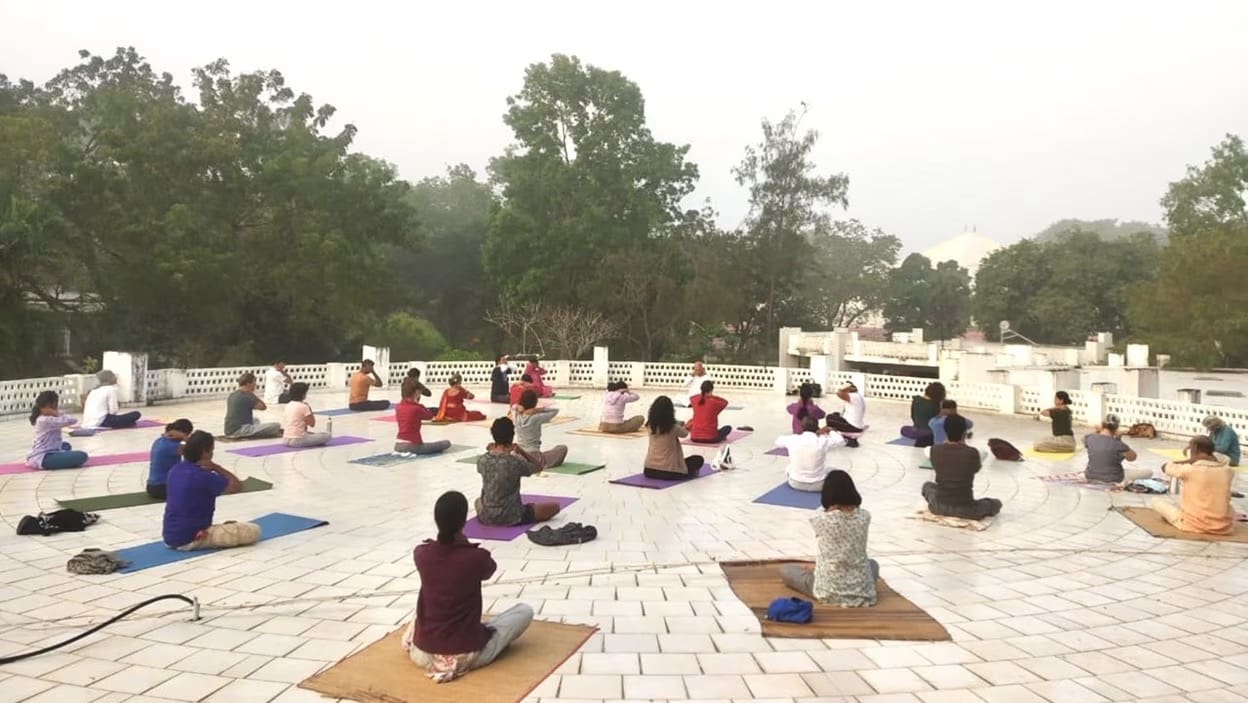
We designed and facilitated a few new learning programs using the framework of श्रवण, मनन, नननिध्यासन, साक्षात्कार (Listening, Reflecting and Sharing, Embodying and Realizing through experiential understanding). The learners committed for a collective learning journey for periods ranging from 3 weeks to 6 weeks with participation every day. Over 100 participants attended our workshops/programs.
All our programs are held with an intention to discover our inmost being and to realize unity. While the Auroville governance systems continue to undergo big changes, with its share of conflicts along the way, what is heartening to see is that in our programs, participants with “opposing views” are able to sit in the same circle and learn and chant together and we do see sparks of a shift towards unity in those moments. We have faced challenges with some people ‘boycotting’ our events because we organized them at a venue or with people they considered to be on the “other side” of the conflict and yet there are some people who have chosen to go beyond the conflict and see our learning programs as a space where we can dissolve the differences. The key learning is to witness the power in purity of intentions. Holding space full of Light and experiencing unity even during the atmosphere of intense conflicts has been one of the most meaningful gifts we have offered as well as received, dissolving the boundaries between givers and receivers, all as instruments of One Divine Consciousness.
We felt like this year was an important milestone in co-creating a format for a transformational learning program that involves reflections and practices in daily life which felt deeply enriching and meaningful for all involved. The joy and peace we witness in the participants during and after attending our programs is the most precious outcome that keeps us going. Here are few messages we received after completing the learning programs:
“The sessions are very inspiring. I love the listed practices for each day. The teachings do not stay as knowledge/gyan only, but I get clarity on implementation too.“
“Thank you for conducting this deep sharing through Satsang on Gita. It has been enormously helpful for me. Can’t thank you enough for creating the space for collective wisdom to emerge. I hope to stay connected with you all. I will strive to keep this burning fire of learning to continue with application in daily life.”
“The sessions were enlightening and contributed so much to my daily peace and wellness. The daily reflections, prompts which I still go back to every other day, keeps me on the path of awareness and clarity. I loved the personal insights shared by all the other participants, and the way you gently urged people to interact. I personally benefitted and started opening up more. This helped me stay with the Oneness – especially within me. Thank you so much for creating this beautiful space. I hope to attend more such. Deep gratitude.”
Aurokiya
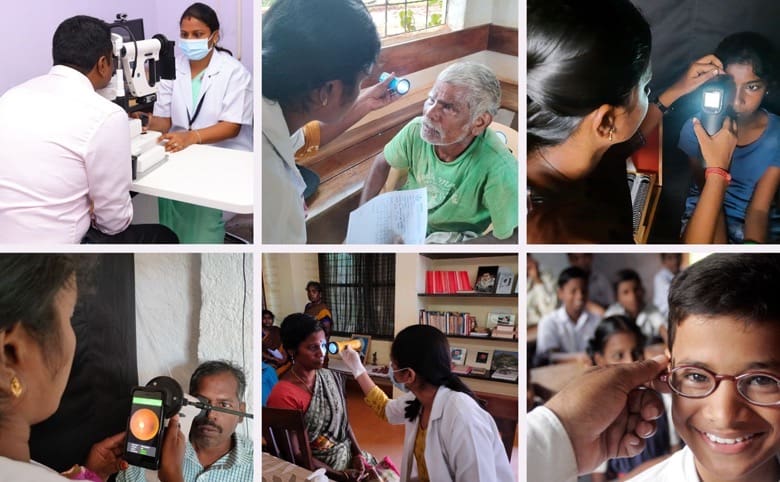
From April 2024 to March 2025, Aurokiya provided direct eye care services to a total of 1,225 individuals. Aurokiya’s work made a meaningful difference by bringing essential eye care services to rural villages where there is little or no access to such care.
Many daily wage earners—who cannot afford to lose a day’s income or spend on medical services—were able to receive free or low-cost eye screenings, glasses, and referrals for surgeries, helping them maintain their vision and continue working without disruption. We also focused on school children, a key population for preventive eye care. Early detection and timely intervention have helped children improve their academic performance and confidence by correcting vision issues at a young age. Additionally, a large number of women from the villages came forward to seek care, many of them accessing eye health services for the first time. Our outreach efforts created a safe and welcoming environment for women to prioritize their own heath.
Deepam
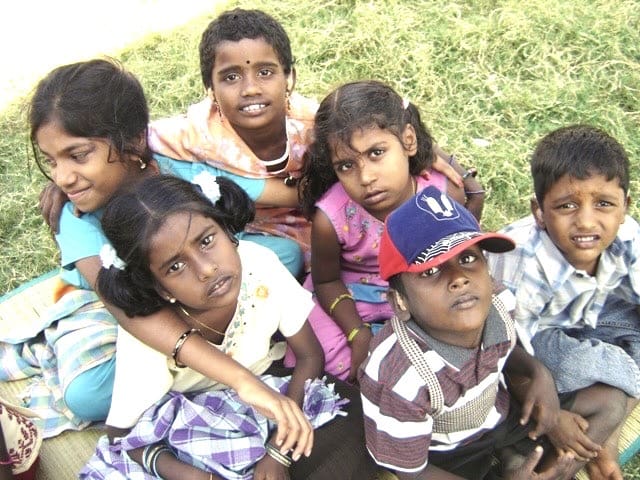
Deepam is a therapy center for children and youth with special needs from Auroville and the surrounding villages. We have 3 main programs: Early Intervention therapies for 20 children, a Daycare Program for 21 children and youth and a Vocational Program for the older youth. We offer a range of activities, basic education and individual therapy sessions such as Occupational Therapy, Physiotherapy and Speech Therapy.
Deepam’s work has directly improved the lives of the 40+ children and youth who have attended our various programs in the past year. Indirectly, our work also positively impacts their families and wider support networks, so the number who are helped by Deepam’s work is difficult to assess, but is probably several hundred in total. Our work directly benefits all the children and youth, and their families, who attend our programs by providing a beautiful and nurturing environment for them to develop and flourish. Many of them come from underprivileged families who would struggle to provide for their basic needs, let alone give them access to the therapies, activities and the nutritional and medical support that is provided by Deepam. Our approach to each child that comes to us is individualized according to their needs and that of their families, and we give them a tailored program that supports them step-by-step and encourages them to thrive.
YouthLink
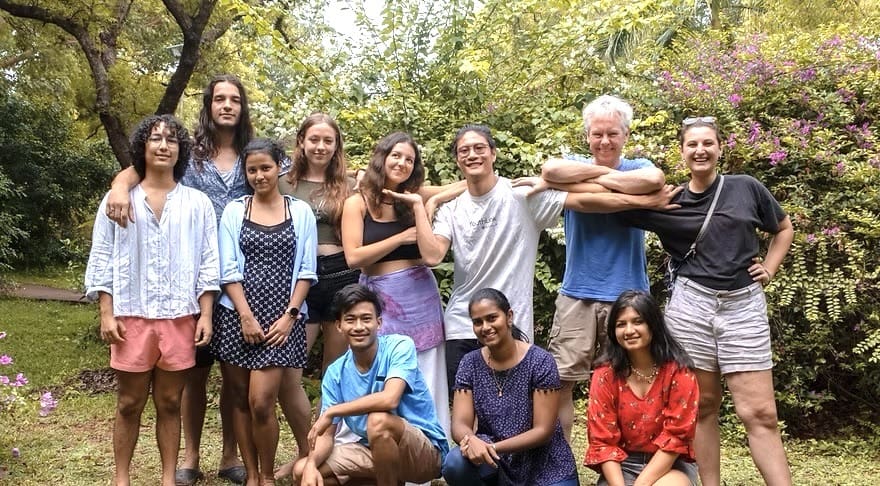
When [you] ask, “Who is benefiting from our work [at YouthLink]?”—the answer is clear: many people in Auroville and the surrounding bio-region. Around 4,500 people [were engaged last year.] We especially focus on the youth, offering workshops that meet their real needs and interests. From the soft skills team, we have IPSE (Interactive Psychological Sessions), which support mental health and create a safe space for young people to share their experiences during difficult times. We also practice NVC (Nonviolent Communication), which brings more understanding, empathy, and connection within the community.
YouthLink is currently offering more workshops and focusing on hard skills. One example is the carpentry workshop, which is part of the Makerspace. This space allows school students to come and create freely and creatively. Whatever they imagine in their minds, they’re able to bring to life—it’s truly amazing. We are also working on Growth Lab-style projects, such as Kombucha, which help people make useful items at home. This reduces their need to buy products from the supermarket and promotes self-sufficiency. Another exciting initiative is the Mushroom Workshop, which teaches people how to grow their own mushrooms. This is not only practical but also empowering for the community.
Looking Forward
We are collecting answers to these questions and budget assessments from each funding recipient. The reflection process is documented in an annual report to us during the summer. I have been reviewing most of the reports, and I am deeply impressed by the depth of reflection that most units engaged in. The partners think about what works and what needs improvement. They can see and explain the links between actions and results. They can see where new investments can yield even greater results.
This last observation is part of the “Now what?” question. Now that they have evaluated their work and results, they can see how to improve their programs to accomplish more. In these efforts we are working with individual partners to help them with some organizational, fundraising, and evaluation efforts designed to make them even more successful.
“So, what about this evaluation effort?”
Well, we practice what we preach. We think the process is working for us and for most partners. We are now reflecting on how we can improve this evaluation effort. Unlike some external evaluators I know who take a “white glove approach” and look for what is wrong, we see evaluation in this context as collaborative. We are using an “appreciative inquiry” approach to identify what works and why and help partners see how they can do more of what works to achieve more.
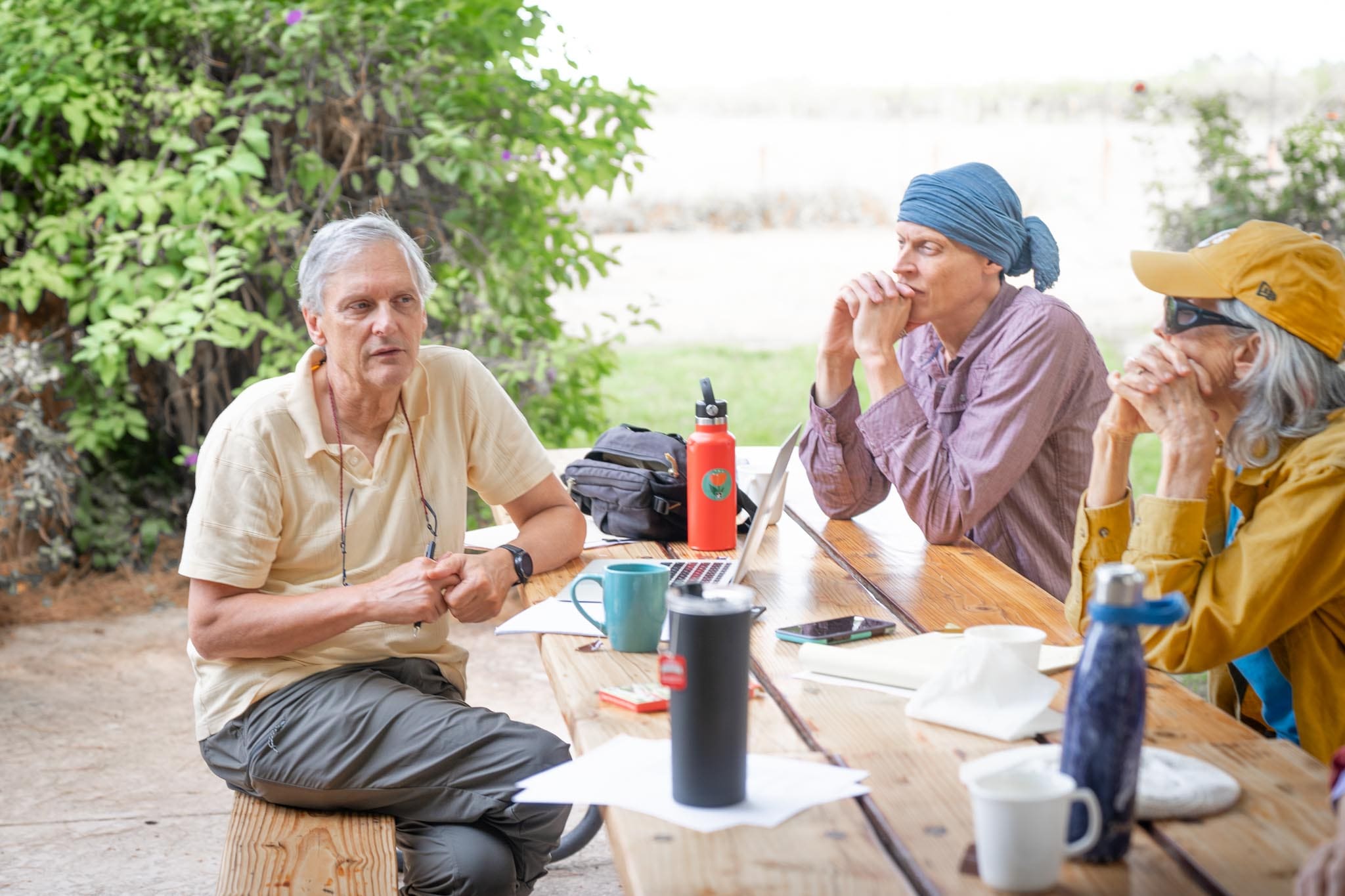
For some, we are getting into more detail. We have helped WasteLess with ways to measure environmental educational outcomes for students across Tamil Nadu. We are now helping the Thamarai after-school program for village youth measure progress in a number of areas related to mental, vital, and physical development with reference to planes and parts of the being as described by Sri Aurobindo. Many others already have good evaluation process in place, and we see this in their annual reports.
In the near future, I suspect more partners will have more data and better analytics to demonstrate and improve their successful work. We will continue to share it with you. But even if you do not care about the details of evaluation, know that the partners you support are engaged in efforts to continually improve their work and measure their results.