
AVI USA Field Notes – February and March 2026
By Matthew Andrews and Binah Thillarajah
Reflections from Matthew
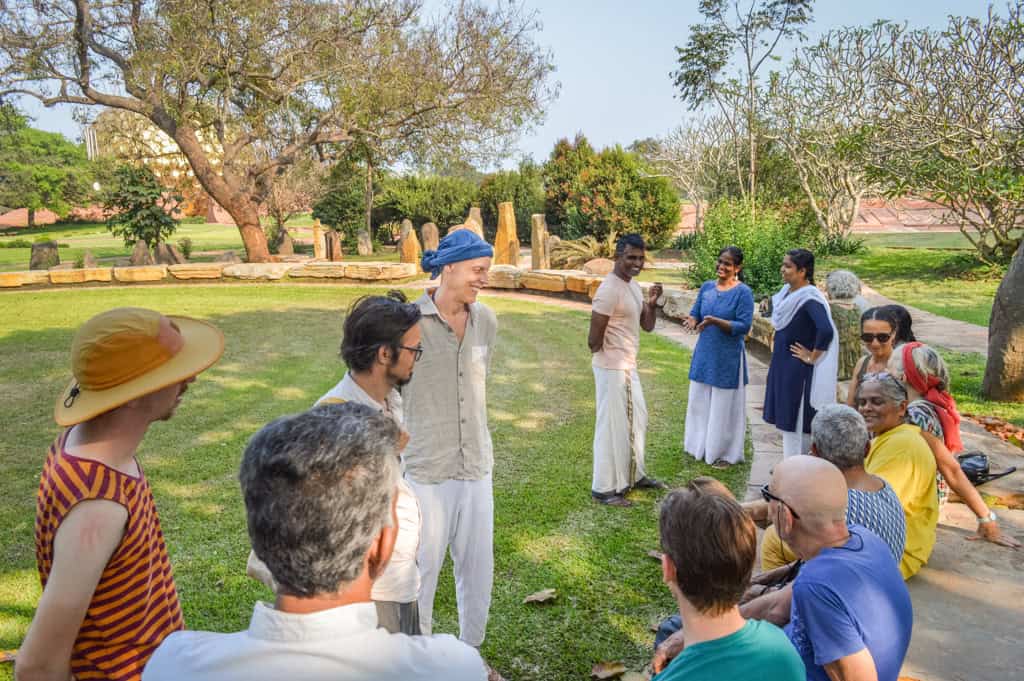
Whenever we go to Auroville, we have a few general priorities. The details depend on what’s emerging at any given moment, but the work that we do requires engagement in the same basic areas from season to season. We connect with our partners and evaluate how our support infrastructure is serving AVI USA’s mission. One of our first highlights, as we set foot in Aurovile, is reconnecting with our AVI USA project partners.
AVI USA Auroville Site Visits
This year the site visits included prospective partners like Kamadhenu Farm and New Era Secondary School, new partners like the Auroville Library and the Sri Aurobindo Centre for Advanced Research, and projects that we’ve worked with for years, like the Auroville Institute for Applied Technology (AIAT) and Kuilai Creative Centre.
This spring we visited 16 project partners, we sat, talked, laughed and strategized for the future.
We met with Lilaloka, Kamadhenu Farm, AVAG, Foodlink, SACAR, Educational Support Fund (ESF), New Era Secondary School (NESS), Kuilai Creative Center (KCC), Auroville Library, Purnam, Mother’s Flower Garden, Auroville Botanical Gardens, AIAT, Budokan, Horse 2 Human and Ilion.
We saw the beautiful new plantings at Mother’s Flower Gardens, the new podcast recording setup at Purnam, the new food processing upgrades at Foodlink, and the new computer lab at AIAT. We saw the facilities needing repairs and renovations at Budokan Aikido Dojo and Lilaloka. We conducted an in depth training on donor relationship management with Auroville Village Action Group, and held strategy sessions with Auroville Library and the Educational Support Fund.
We left inspired by the great work being done by our partners to manifest the spirit of Auroville in unique and beautiful ways. Below is a link to a summary of this spring’s site visits. Take a look and learn about some of our partners progress and program updates.
Behind the work, in stewardship
After the joyful discoveries and connections with our old new and prospective partners, our work moves to the field of nonprofit grant making logistics, an area of work that needs lots of behind the scenes attention, that is supported by Auroville’s administrative structures, connecting with donors, and arranging AVI USA community meetings.
First, we need to ensure that the grants we send are getting to the projects that we intend to support. This year we had some very positive and helpful meetings with the Donation Channeling Group and FAMC that have led to increased communication and collaboration – generally a freer flow of information that helps us feel confident every time we send a grant.
Second, we need to make sure that the funding received by the projects is being spent in alignment with our granting intentions. This year we conducted official site visits with 16 projects, and had more informal meetings with many more. These visits allow us to see what’s happening on the ground, understand the basic challenges and opportunities that our partners face, and provide support as needed.
Third, we always try to empower and uplift our project partners to expand their capacity and impact. This year we hosted a Partner Appreciation Lunch at Mohanam that drew close to 100 attendees. We also offered individualized training and mentoring to many of our partners via site visits and other meetings.
And fourth, we always meet, thank, and strategize with the generous donors that happen to be in Auroville while we’re there. This year we met with dozens of donors, some of whom have supported Auroville for many years and others who are just learning about our work and the work of our partners. These meetings left us feeling confident that our support base continues to be robust and enthusiastic, and that AVI USA’s work will continue to grow and thrive in the years to come.
Reflections from Binah
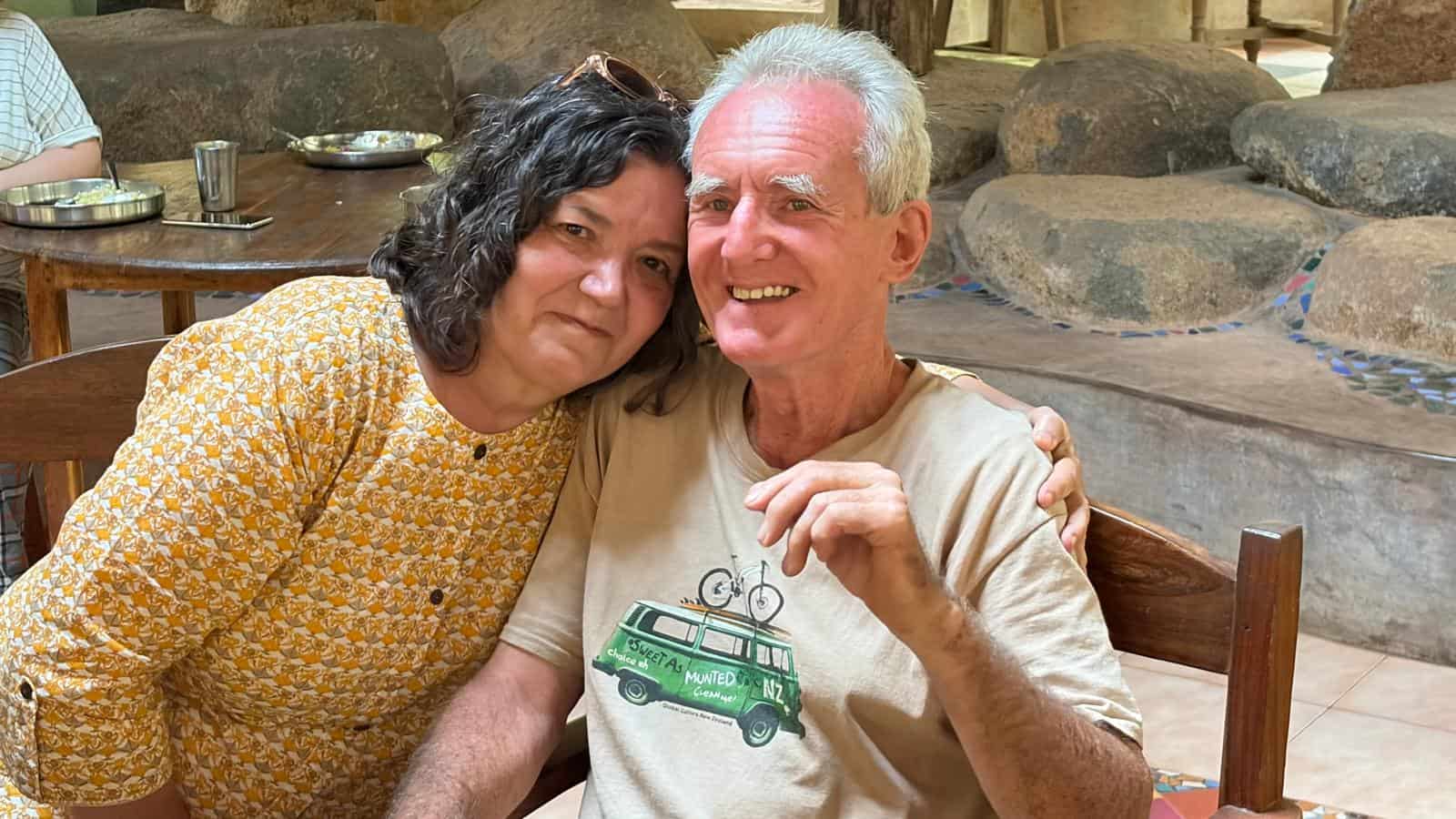
Being in Auroville, I experience it in two ways at once — as someone who grew up there, shaped by its people and its history, and through the lens of AVI USA, asking how we can help. As I move between the ancient past, the present, and what is still emerging, I feel a deep gratitude — for growing up there, for seeing some of this work come into bloom, and for the many people who have followed their hearts to bring it into being. That comes into focus in moments like visiting Joss at Pitchandikulam Forest. As a child, I remember seeing him plant that forest; walking through it now under a dense canopy, I can feel the passage of time in a very tangible way. What began as an offering decades ago has taken root and continues to grow — as does the steady commitment of those who continue this work.
This is something I see across our project partners. Their work is shaped by the places they live, the communities around them, and a willingness to stay with both the successes and the challenges. With a background in international development, I feel the contrast — between approaches that can feel more academic or designed from a distance, and the work I see in Auroville, which is lived, embodied, and rooted in place.
What stays with me across all of this is the care — the attention to detail, the sense of beauty, and the authenticity with which so many people express their work. We saw this with the Matrimandir team, where many have spent decades in quiet, dedicated service, welcoming visitors and meditators from around the world into a space of beauty and stillness, where something quietly sacred is palpable.
I also saw it in the Endangered Craft Mugam, where traditional craftspeople from across South India share their knowledge with local children — hands-on, embodied, passed from one generation to the next. There is something powerful in seeing these skills not just preserved, but lived and shared in real time. I also saw it in income-generating initiatives like Hibiscus, where Sowmya, after years working in the wider world of fashion in Europe, now works in a slower, more intentional way — “slow fashion” — using plant-based dyes and natural fabrics. There is a palpable sense of purpose — a kind of quiet offering — that bridges the spiritual and the material. I also had the chance to meet with over 30 visiting supporters from around the world, and what struck me there was something similar — how deeply people are moved by Auroville and the work of our project partners, and how much they want to stay connected in a meaningful way. Across it all, what stands out is how much people care — and how this work continues, through many hands, to take shape.