
Monica Matsumoto and Nonviolent Communication in Auroville
A Young Voice for Conscious Communication
One of the recipients of the AVI USA Scholarship Grants, Monica Matsumoto, shares her story and journey with Nonviolent Communication. Monica is an Auroville youth who connected with Nonviolent Communication soon after highschool. She attended numerous workshops and helped bring a recent Nonviolent Communication workshop to Auroville this past March. AVI USA was thrilled to support Monica on her own journey to become certified in this internationally recognized peaceful communication technique. Monica has volunteered her time in numerous community initiatives as part of Auroville’s YouthLink.
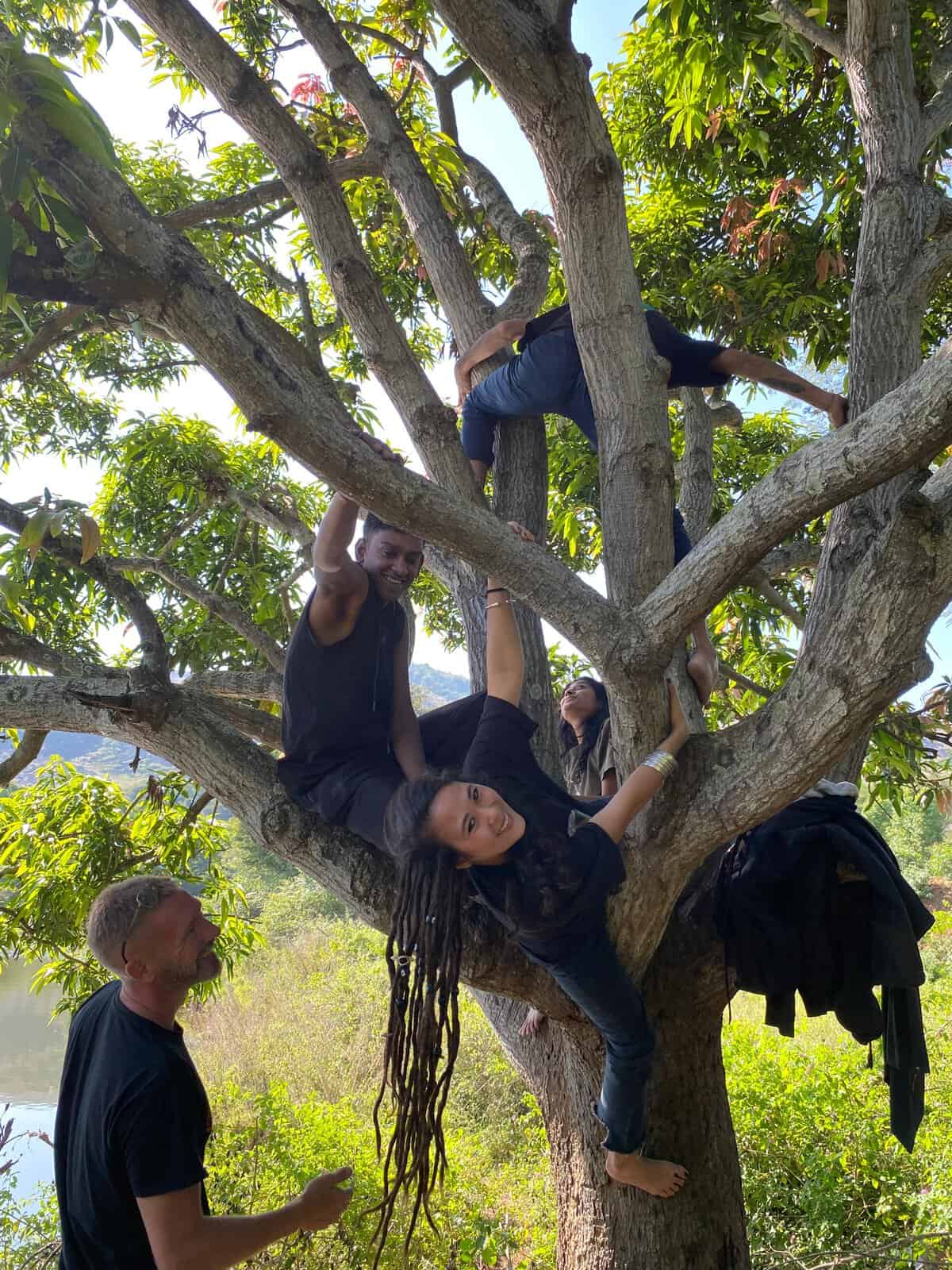
“The hardest relationship I’ve ever had was with myself.”
Instead of asking “What’s wrong with me?”, ask:
“What need am I trying to meet?”
-Monica
Speaking Before It’s Too Late: Monica Matsumoto’s Journey into Conscious Communication
For Monica Matsumoto, the path into conscious communication began somewhere in between a gradual awakening, and a sudden, irreversible shift. What has emerged from her inner foray into the nature of consciousness is not just a practice she teaches, but a deeply personal exploration she continues to live: how to speak truthfully, love fully, and connect before it’s too late.
A Different Way of Making Change
Monica grew up in Auroville, surrounded by nature, freedom and a strong inner belief in transformation. Like many Auroville youths, her initial aspiration of making an impact in the world centered around ecological work and sustainability — the type of work Auroville is known for – reforestation, cultivation of endangered plant species, water catchments, soil conservation. Many Auroville youth are naturally involved in addressing the visible challenges facing the planet through ecological conservation work and sustainability. During her elementary school years at Transition School, she took a deeper look at her motivation. Inspired by the brother and sister team of Ribhu Vohra, and Chandrah Nusslein’s Garbology curriculum, which focuses on finding the roots of pollution in our everyday behavior, Monica experienced a deep personal insight. “I realized that instead of just trying to fix the effects, I wanted to go to the root,” she says. “Instead of mopping the floor, I wanted to close the tap.”
That shift turned her attention inward—toward people, relationships, and awareness itself, to discover an inner pathway of reaching the root of what creates the imbalance that Auroville’s ecological work tries to address. One of her initial realizations stemmed from her own experiences in communication. As a child, she struggled with the experience of desiring a particular outcome and being frozen with an inability to skillfully communicate in a way that brought the desired result. Working with communication, she discovered, was not simply about improving conversations. It was about transforming consciousness.
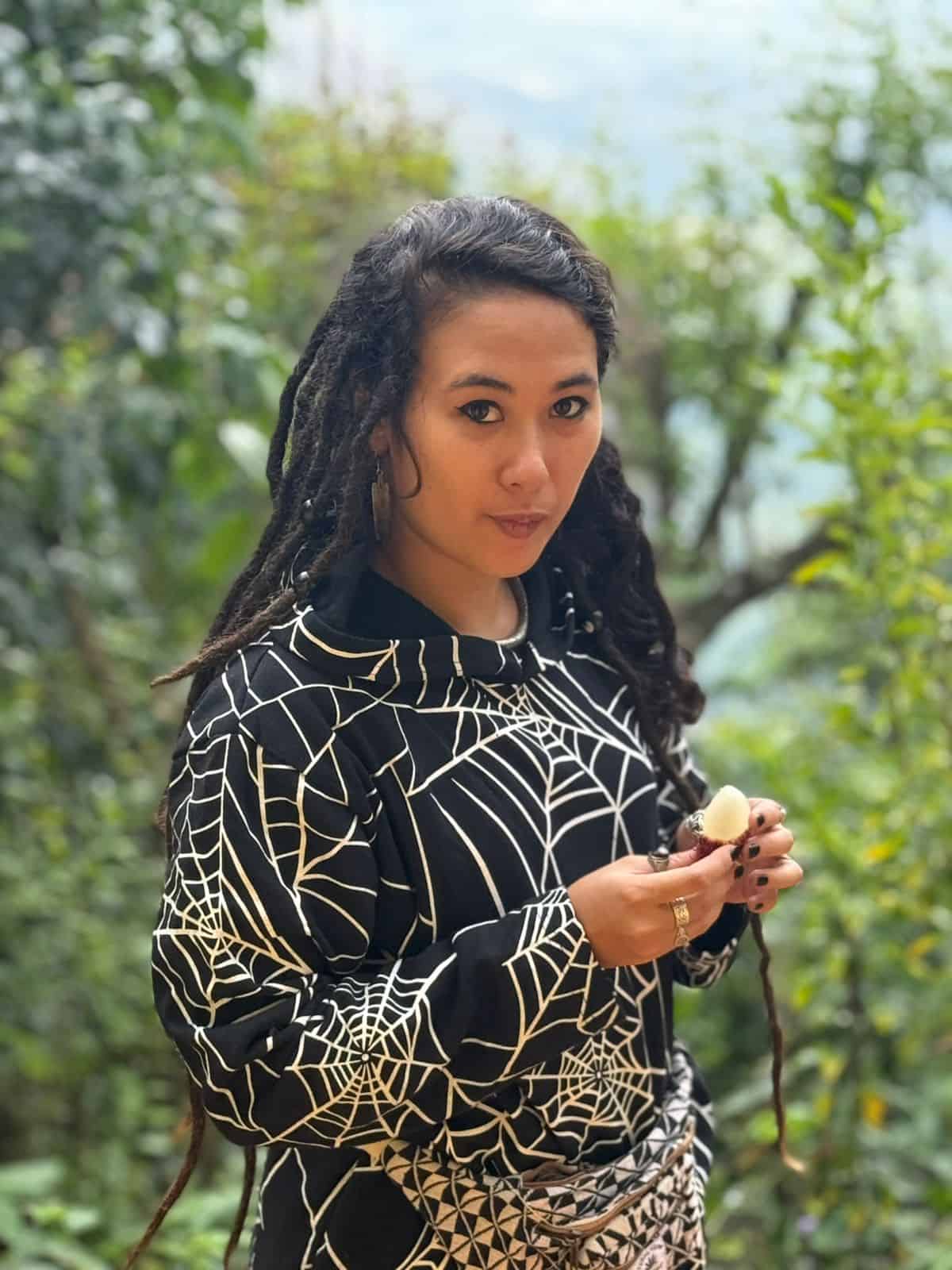
“Nonviolent communication isn’t just a tool, it’s an awareness practice. The techniques are just the surface—what really matters is the consciousness behind them.”
Connecting with Nonviolent Communication (NVC)
Her introduction to Nonviolent communication (NVC) was not immediate or easy.
“I actually didn’t like it at first,” she admits, laughing. “I was very triggered by the facilitator. I spent most of the workshop judging them, over and over again, in my head.”
And yet, something stayed with her.
By the end of that same workshop, she found herself buying a book on NVC. It sat untouched on her shelf for nearly a year—until, slowly, something called her back.
When she returned, she immersed herself completely. For months, she spent every weekend in workshops, moved by an inner sense of discovery, and intuitive connection. There was an especially intense period of two months without any time off, working 5 days a week followed by Nonviolent Communication workshops every single weekend. An invisible thread kept pulling her to explore deeper aspects of awareness, communication and consciousness that NVC brings to the surface.
What she found was something she had been searching for since childhood.
“I always felt like there was a gap between what I wanted—to connect with people—and what I was actually doing,” she says. “I didn’t know how to express myself in a way that created connection. I thought something was wrong with me.”
NVC offered a language, but more importantly, an awareness—a way of understanding both herself and others.
“It felt like the missing piece,” she says. “Like a manual for living that I never had.”
A Practice Created from Loss
Then, a year and a half ago, Monica’s life shifted again. Her close friend Vaishali died suddenly in a road accident.
In the days that followed, Monica was struck by something deeply familiar, and painful: the realization of all that had gone unsaid.
“We often only realize after someone is gone what we wanted to tell them,” she says quietly. “What they meant to us. What we valued.”
After Vaishali’s passing, she noticed how easily people spoke from the heart—offering words of love and appreciation that had never been expressed before.
She was left with a question lingering: why do we wait? Why is it that we are caught in a cycle of negative details, but cannot tap into the immense love we feel for one another until faced with profound loss and tragedy?
Not long after, during a brief reunion with another close friend, Monica felt the frustration of time slipping away in surface conversation. Despite having a beautiful afternoon, the deep connection she knew existed was getting lost in superficial chatter. On impulse, she asked the question that arose after Vaishali’s passing: “If I were to die tomorrow, what would you regret not having told me?”
The effect was immediate.
“In just a few minutes, we were both in tears,” she recalls. “It brought us straight to something real—something we wouldn’t have reached otherwise.”
That moment became the seed of what she now calls the Eulogy Process.
The Eulogy Process: Opening the Heart
Monica began developing a simple yet powerful practice: creating a space where people speak to one another as if it were their last chance.
Often done as a guided role play, the process invites participants to step beyond social habits and speak from a deeper place. Drawing from NVC, it includes elements such as mourning, celebration, appreciation, and honest expression—allowing both love and difficulty to be named.
What makes the process unique is its quiet use of mortality—not as something dark, but as something clarifying, something real, perhaps the most real part of our lives.
“We’re so conditioned to notice what’s wrong,” Monica says. “But when we imagine losing someone, everything shifts. What really matters becomes obvious.”
Participants often find themselves speaking truths they have carried for years.
In a workshop Monica recently held in Costa Rica, a participant shared that he felt a tension held for 15 years with his brother dissolve—without ever having spoken to him directly.
“Just going through the process of role playing, and speaking to his connection to his brother in the safe space of the workshop, changed something inside him,” Monica says. “The way we relate can transform from within.”
Bringing the Work into the World
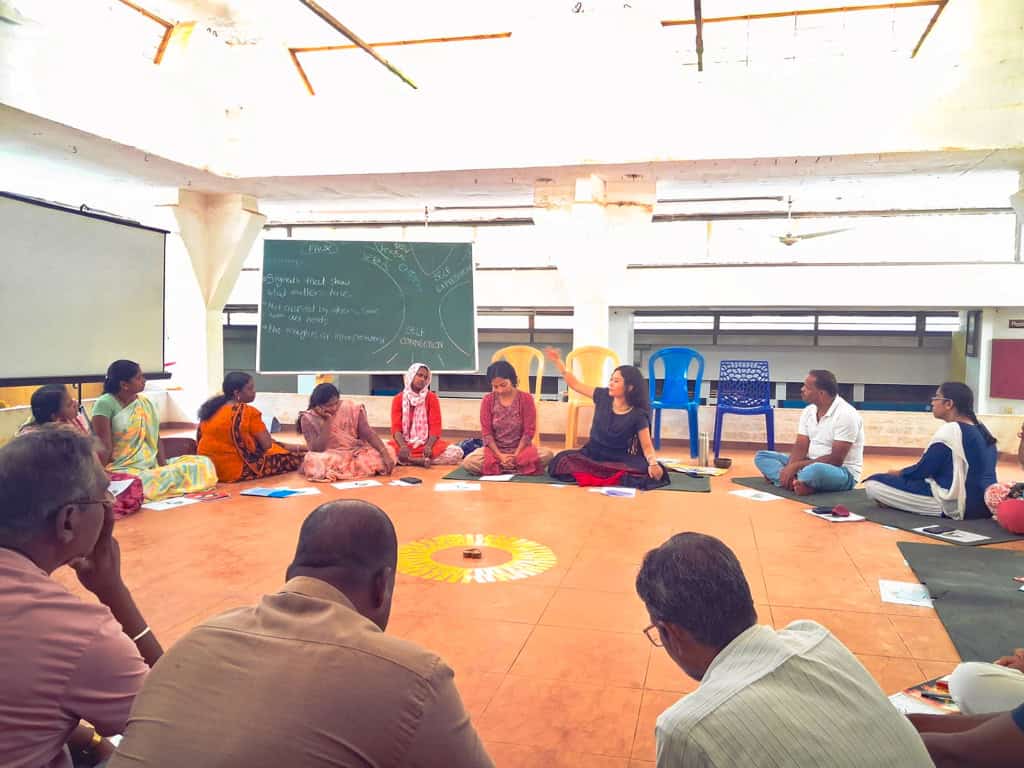
Today, Monica is beginning to share Nonviolent Communication more widely through her involvement with YouthLink, a youth-led initiative in Auroville focused on collaboration and social impact.
Through an unexpected connection, she was recently invited to offer workshops at NESS. The invitation came not through formal outreach, but through conversation—one that quickly turned into action. “I hadn’t planned it,” she says. “It just emerged.”
Her approach is thoughtful and organic: beginning with teachers, then potentially extending to parents, and eventually to students.
“I feel that if we start with the adults, it creates a foundation,” she explains. “And then it can naturally reach the children.”
The response so far has been open and curious, with both teachers and school leadership engaging in the sessions.
Alongside this, Monica continues to offer workshops in other settings—each one an opportunity to refine and deepen the process she is developing.
Turning Toward the Self
While Monica’s work focuses on relationships, its deepest transformation has been inward.
“The hardest relationship I’ve ever had was with myself,” she says. She describes years of intense self-criticism—replaying past moments, feeling shame, blame, and guilt, even struggling to sleep under the weight of her own thoughts. Through NVC, she began to relate to herself differently. Instead of asking “What’s wrong with me?”, she started asking:
“What need was I trying to meet?”
That shift—from judgment to understanding—has been gradual, but profound. “It doesn’t mean I always like what I did or said,” she says. “But I can see that it was an attempt—an innocent attempt—to meet a need.” This growing self-awareness has become the foundation for everything else.
“The way I relate to myself colors all my relationships,” she says. “That’s where it starts.”
Auroville – the Eulogy Process
In a place like Auroville—where ideals of unity meet the realities of human complexity—Monica’s work feels particularly relevant.
“We often focus on what divides us,” she reflects. “The differences, the conflicts.”
But what if that perspective could shift?
She sometimes imagines Auroville itself through the lens of her process:
“If Auroville disappeared tomorrow, would we still focus on the problems?” she asks. “Or would we feel how precious it is—that this community even exists?”
The question lingers—not as a conclusion, but as an invitation.
Saying What Matters
At its heart, Monica’s work rests in the simplicity of our own inner experience
It asks only this: “What would you say, if this were your last chance?”
Whether in a workshop, a classroom, or even around a dinner table, the process creates moments of honesty that are often rare in everyday life.
“It doesn’t have to be heavy,” Monica says. “It can be joyful. It can be beautiful and fun.”
And perhaps that is the quiet revolution within her work, a deeply human way of reconnecting with our sense of fear and loss to reveal a profound sense of connection and love for one another that is at the center of our being
It is a joy and a privilege for AVI USA to support Auroville youth who are courageously following their passions and offering something meaningful to the world. We warmly congratulate Monica Matsumoto for her sincerity, depth, and the beautiful work she is unfolding.