
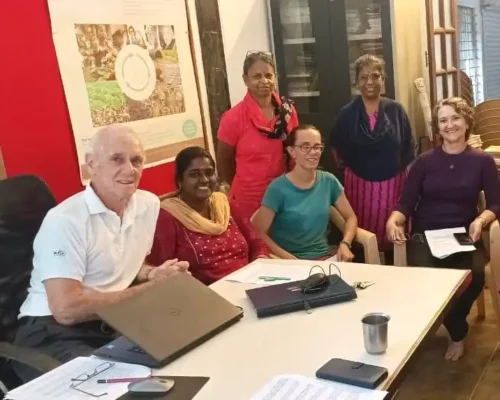
Inside ESF – A Small System, Rewritten
A conversation with Mahi, member of ESF
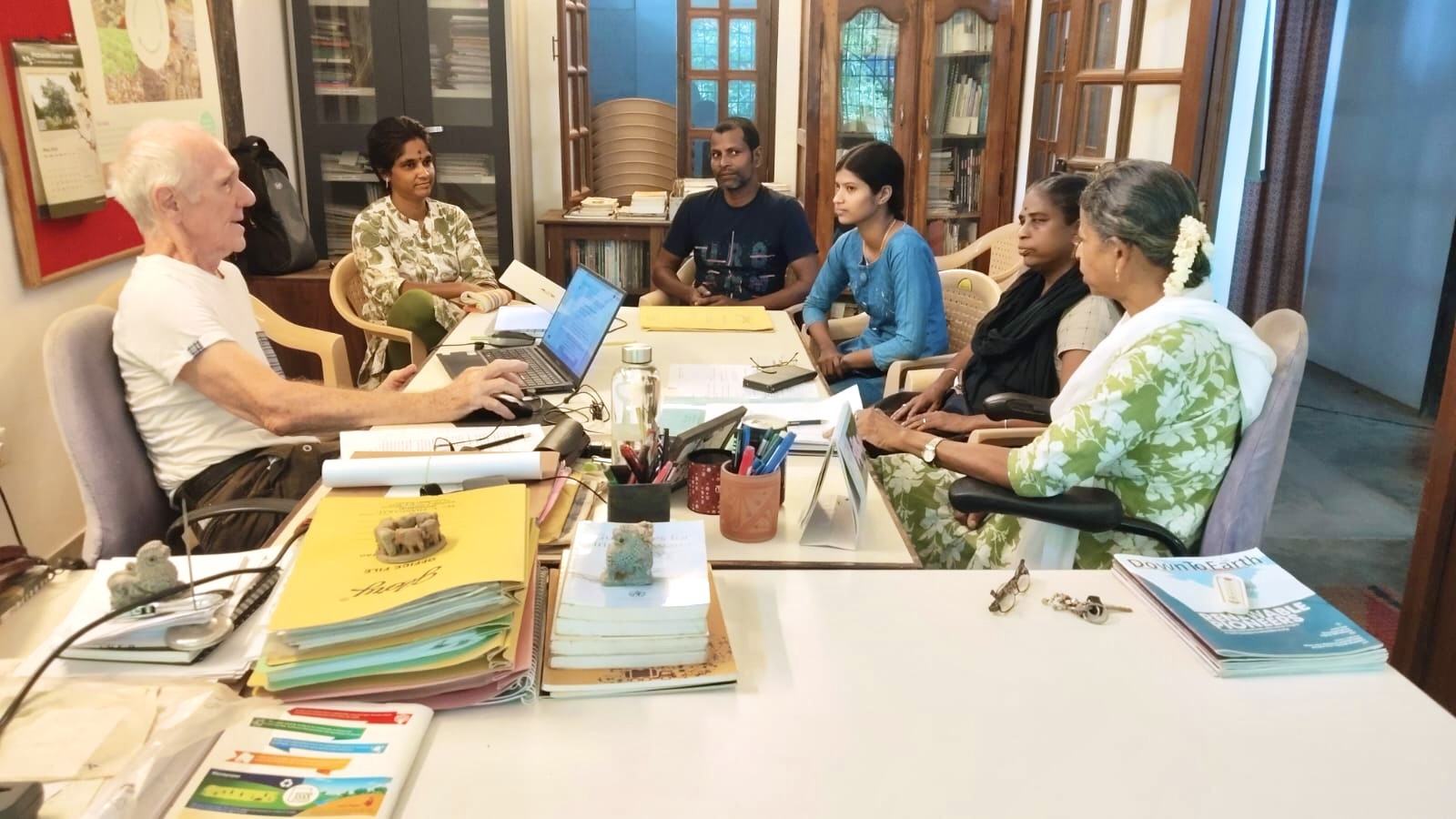
But to understand how ESF works, it is more useful to begin at the moment it enters a student’s life.
—Mahi
When Support Enters a Life
We met Mahi, one of the core members of the Educational Support Fund (ESF) in Auroville, to understand how the program is functioning after a year of changes and growth.
ESF is a small, Auroville-based initiative that supports students pursuing higher education outside the community. It sits at the intersection of education, community life, and financial aid — a structure that has evolved over time from interest-free student loans into a grant-based system, and now into a more formally regulated funding mechanism shaped by recent administrative changes.
But to understand how ESF works, it is more useful to begin at the moment it enters a student’s life.
For many families in Auroville, that moment arrives at the end of higher secondary school or the transition into college — when education shifts from locally supported systems into externally financed institutions, and when costs begin to exceed what families can manage on their own.
At that point, ESF support can determine whether a student moves directly into higher education or is forced to pause, delay, or reshape their plans. The funding is not designed to carry an entire education. It is designed to bridge specific thresholds — exam fees, first-year tuition, partial college costs — where continuity is most at risk.
Inside a Familiar Room
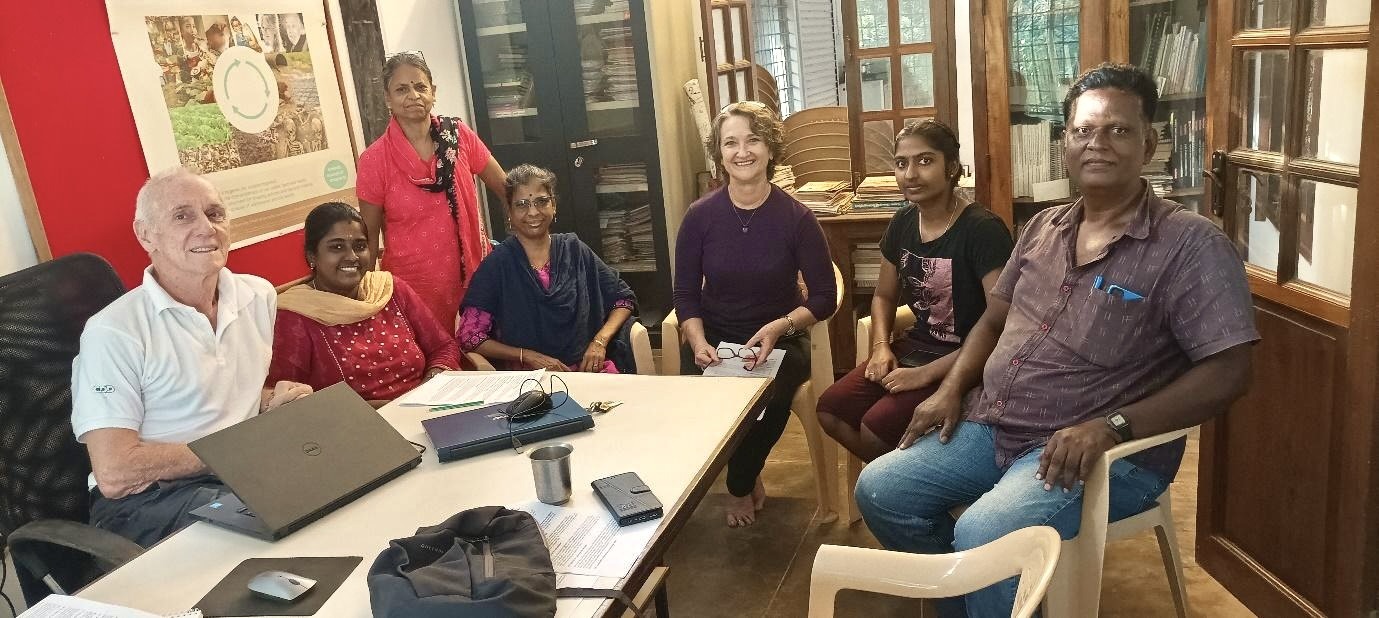
Mahi works at Transition School in Auroville, and like several members of the ESF team, she is embedded in the same educational ecosystem that produces many of its applicants.
That proximity quietly defines the system.
When students arrive for interviews, they are often not entering an unfamiliar institutional setting. They are stepping into a room where they may already be known — through school, through family, or through years of overlapping educational life in Auroville.
As a result, ESF interviews are structured but familiar. They combine formal assessment with the connections of Auroville’s close knit community circles and instant familiarity.
How ESF Spreads Its Support
The structure of ESF reflects an attentive approach to limited resources.
Rather than fully funding a small number of students, ESF prioritizes partial support for a larger group — often enabling around forty students in a cycle. The assumption is that ESF contributions form one part of a wider funding mix, supplemented by family resources, college structures, or external scholarships. Support is granted for one year at a time. Students may apply for subsequent years in the same program with a simple email and by sharing their academic results/marks sheets.
This model extends ESF’s reach across multiple disciplines and stages of education.
Current students supported by ESF are pursuing degrees in a variety of areas including health sciences, business administration and management, computer science, artificial intelligence, aeronautical engineering and accounting and professional commerce programs.
What Students Choose to Study
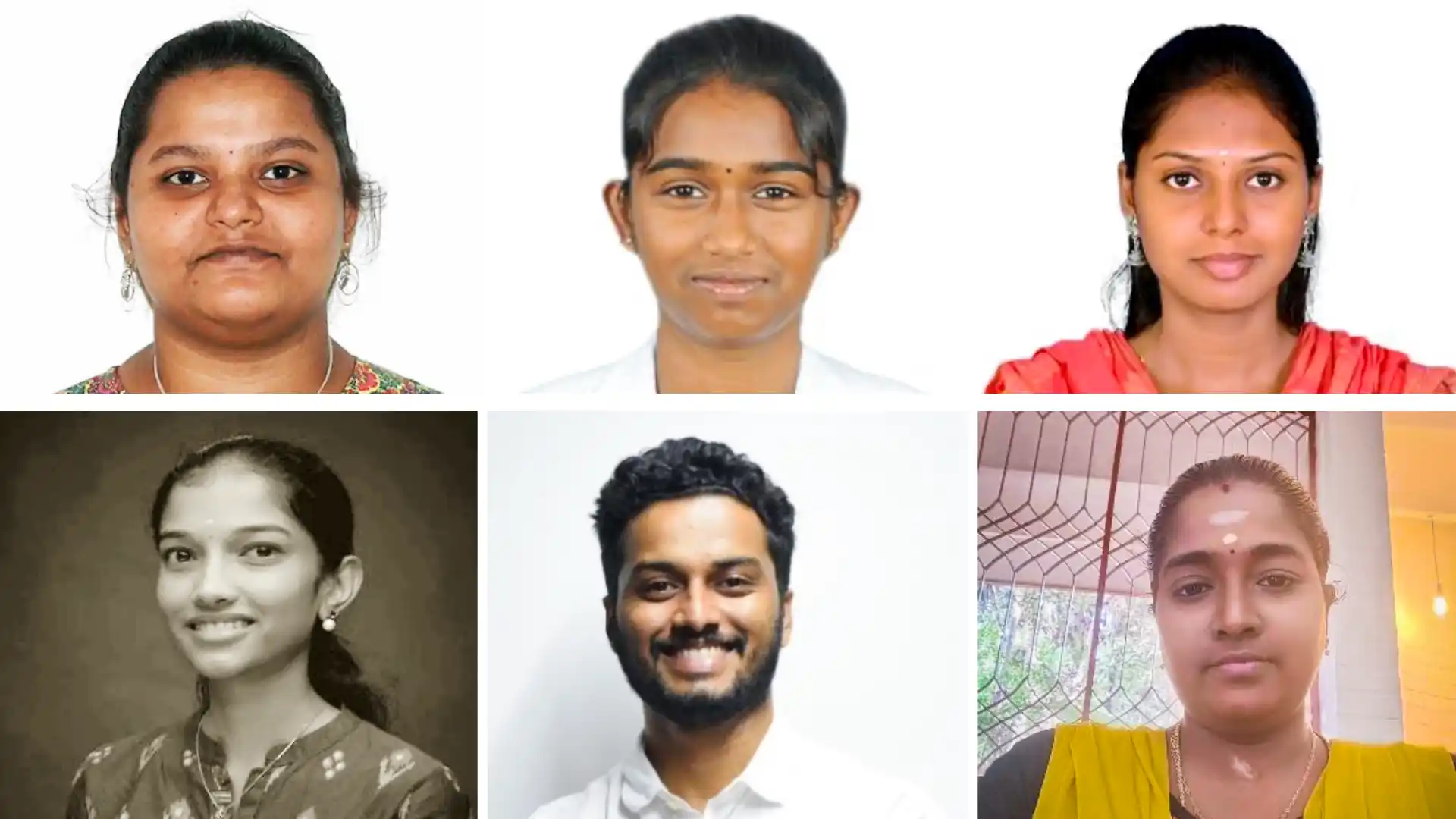
The six ESF recipients above, pursuing studies in fields ranging from journalism and physiotherapy to engineering, biotechnology, education, and communications, illustrate the transformative impact of the Educational Scholarship Fund. For them, access to education enables overcoming financial hardship, complete undergraduate and postgraduate studies, and pursue meaningful careers. The six students pictured contribute their skills to Auroville through education, healthcare, engineering, consulting, and community service, while also choosing to repay their scholarships so future generations can benefit. Together, these experiences demonstrate how investing in students creates lasting benefits not only for individuals, but for families, the Auroville community, and beyond.
The choices students make are also a key part of how ESF’s support unfolds in practice. Applications arrive with a wide range of academic directions, but certain fields appear with consistent frequency, reflecting both national trends and perceived pathways to employment.
A growing number of ESF-supported students now enter computer science, artificial intelligence, and related digital fields. The globally relevant pathways, with strong employment prospects outside Auroville are in high demand with highschool graduates. Alongside this, business administration and management programs are still a draw. Many students turn to health sciences continue to form another major stream. Physiotherapy, nursing, pharmacy, and other allied medical fields account for a significant share of applicants, often reflecting students who initially considered medicine but moved into adjacent disciplines.
A smaller but steady group pursue accounting and professional commerce qualifications, including chartered accounting tracks, which require long-term commitment and structured progression.
There are also students in fields such as journalism, English, and mass communication, as well as performing arts, environment, geology, agriculture and education-related degrees. These pathways are less numerically dominant, but often closely tied to a desire to work in communication, teaching, community-based roles, or with the land.
What stands out is not only the range of disciplines, but the way students often frame their choices. Many applicants speak about education in terms of return — not just personal advancement, but the possibility of contributing back to Auroville in some form after completing their studies.
That intention, however, intersects with a practical reality that ESF sees over time. While some graduates do return and find roles aligned with their training — particularly in education, health, or technical fields — others enter a process of adjustment. The professional landscape within Auroville is narrower than the range of external qualifications, and reintegration often depends on flexibility rather than direct skill matching.
Still, return is a recurring pattern rather than an exception. In some cases, it brings ESF into a full cycle: former beneficiaries re-entering the same ecosystem, sometimes even the same institution, in a new capacity.
A System Under Redefinition
Alongside this continuity, ESF has also undergone significant structural change.
In April 2025, the fund transitioned from a long-standing model combining interest-free loans and partial repayments into a fully grant-based system. The change followed guidance from Auroville’s financial governance and auditing bodies and required a formal redefinition of eligibility and funding scope.
For several months, the system operated in a period of adjustment. Eligibility criteria were under revision, funding boundaries were being clarified, and decision-making slowed as the team waited for final confirmation of the new framework.
By July 2025, the updated structure was formally established. ESF now supports Indian Aurovilian students pursuing higher education in India, through grants only, with no expectation of repayment, and with revised eligibility based on nationality.
Administration, Adaptation, and the Weight of Process
Even as these changes were introduced, administrative demands on the team increased.
New accounting systems, reporting requirements, and coordination with donation channels have added layers of structure to a system already run by a small group of people balancing ESF alongside other educational roles in Auroville.
Despite this, the core rhythm remains consistent: students apply, families are interviewed, and decisions are made collectively within a system shaped as much by relationships and familiarity as by formal procedure.