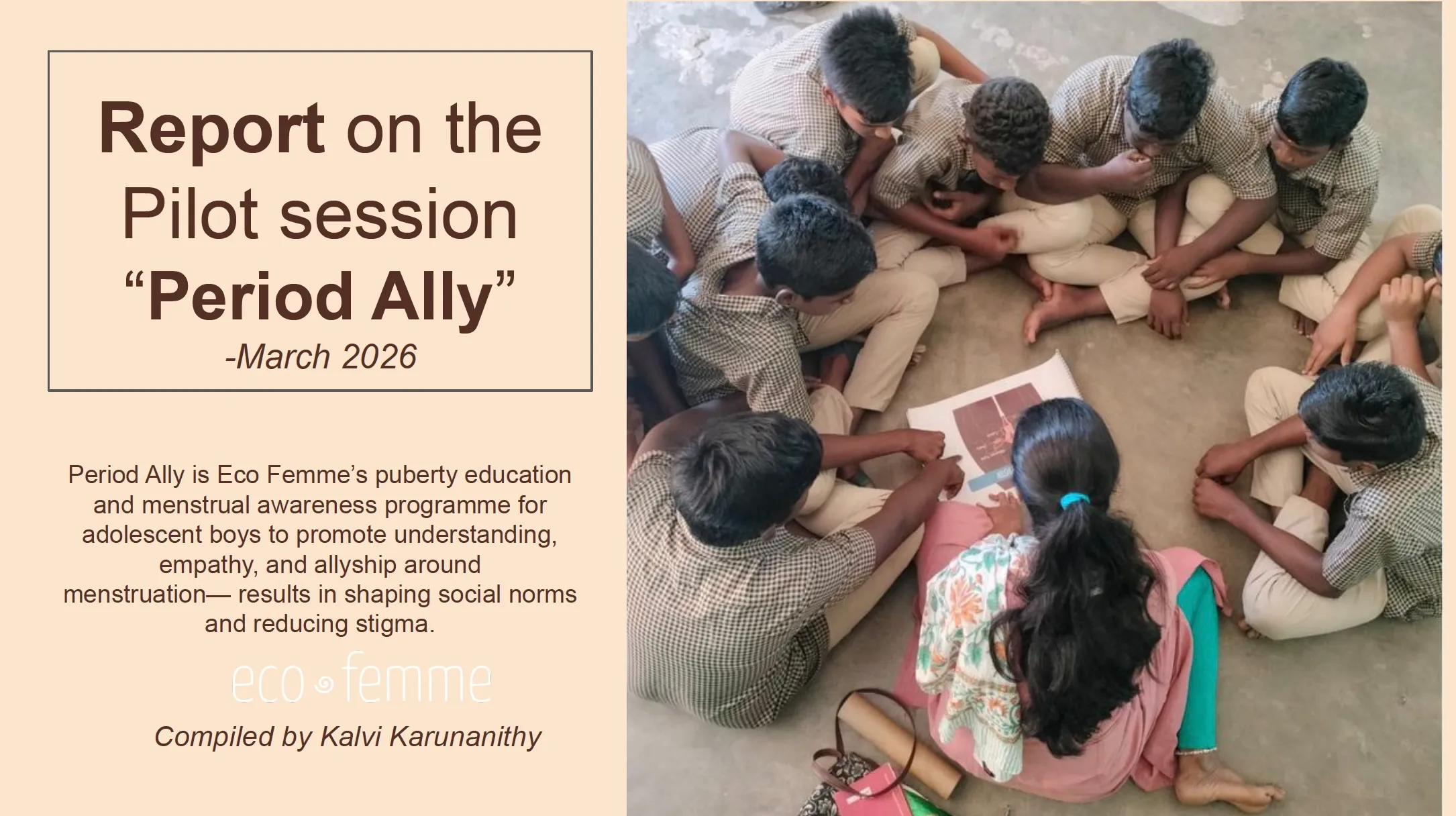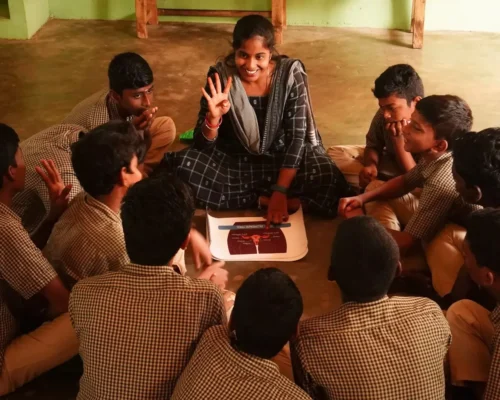
Period Ally with Auroville’s EcoFemme:
Educating Boys to Build More Supportive Communities
a conversation with Kalvi Karunanithy of EcoFemme
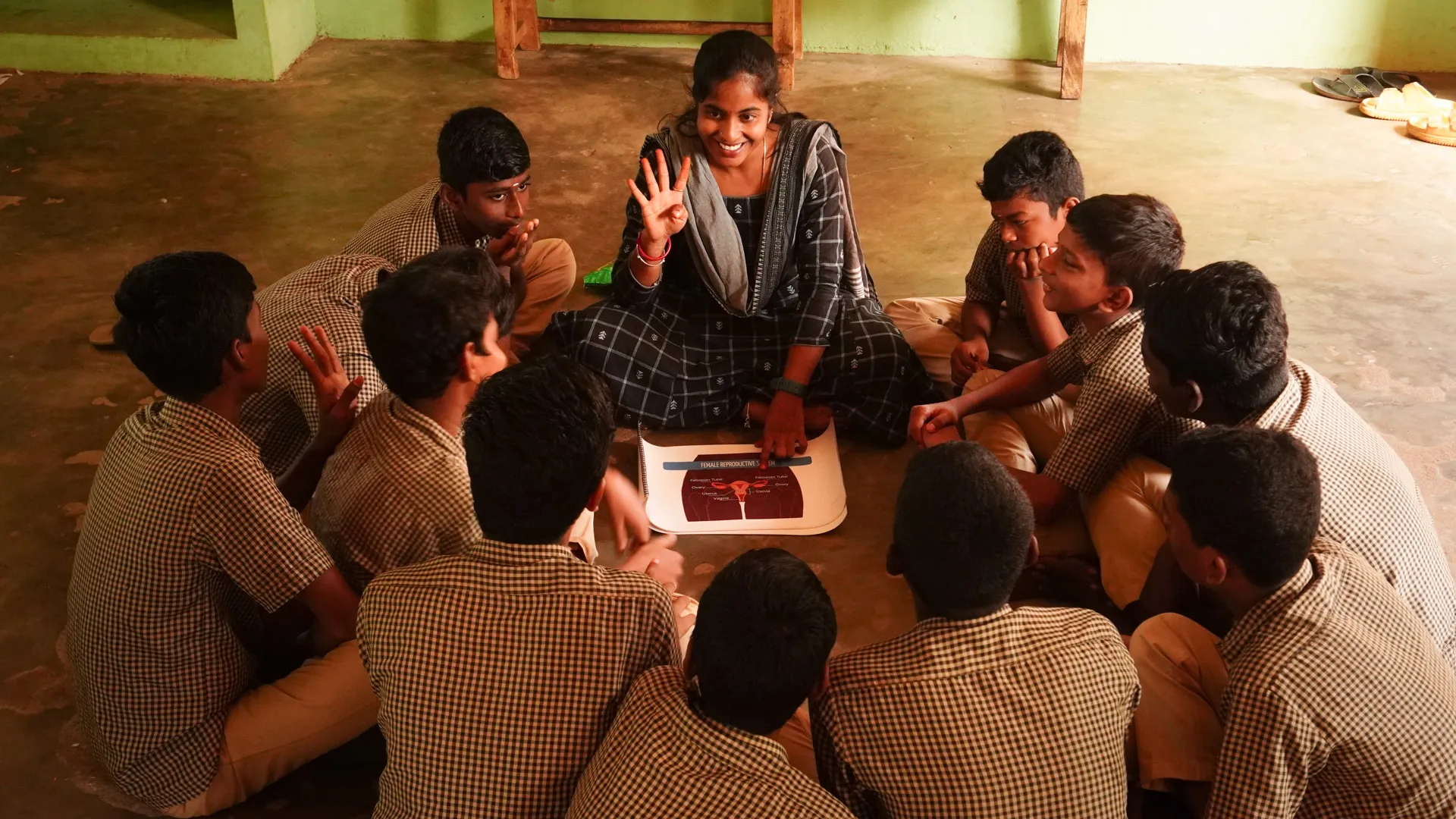
When EcoFemme facilitators visit schools through the organization’s long-running Pad for Pad program, they usually expect eager participation from girls learning about puberty, menstruation, and reusable menstrual products.
What they did not expect, at first, was the steady stream of boys standing outside classrooms, peeking through doors, and asking if they could join too.
“Every time we visited schools, boys would come and ask, ‘Why are you here? Can you teach us also?” says menstrual educator Kalvi, who has facilitated Pad for Pad sessions for the past 8 years. They were very curious. They wanted to understand what was happening with their mothers, sisters, and classmates.
Those repeated encounters eventually sparked an idea that eventually led to the creation of Period Ally, a new pilot program designed to educate adolescent boys about puberty, menstruation, emotional development, gender equality, and supportive behavior toward girls and women.
For Kalvi, the need for such a program is rooted in a broader vision of human development — one grounded in self-awareness, empathy, truth, and knowledge, and in the belief that social transformation begins through education, conscious relationships, and a deeper understanding of ourselves and one another.
Beyond Menstrual Education for Girls
Pad for Pad has long focused on supporting girls through menstrual education and reusable cloth pad distribution. But while working closely with adolescent girls and observing their transformation into confident and strong young women, Kalvi began noticing another problem unfolding quietly alongside it.
“Girls were receiving information, even if there was still shame around menstruation,” she explains. “But for boys, there was complete silence.”
That silence, she says, often leaves boys confused and dependent on fragmented or misleading sources of information. Many pick up partial ideas from television advertisements, overheard conversations, peers, or internet pornography, without having trusted adults or educators to guide them.
“In the schools, I saw that boys were deeply curious,” Kalvi says. “But nobody was answering their questions.”
The result is not only misunderstanding, but teasing, stigma, and emotional isolation for both boys and girls.
For Kalvi, educating boys is not separate from supporting girls — it is essential to it.
“If we educate boys correctly,” she says, “many problems in society can slowly begin to change.”
The First Pilot Sessions
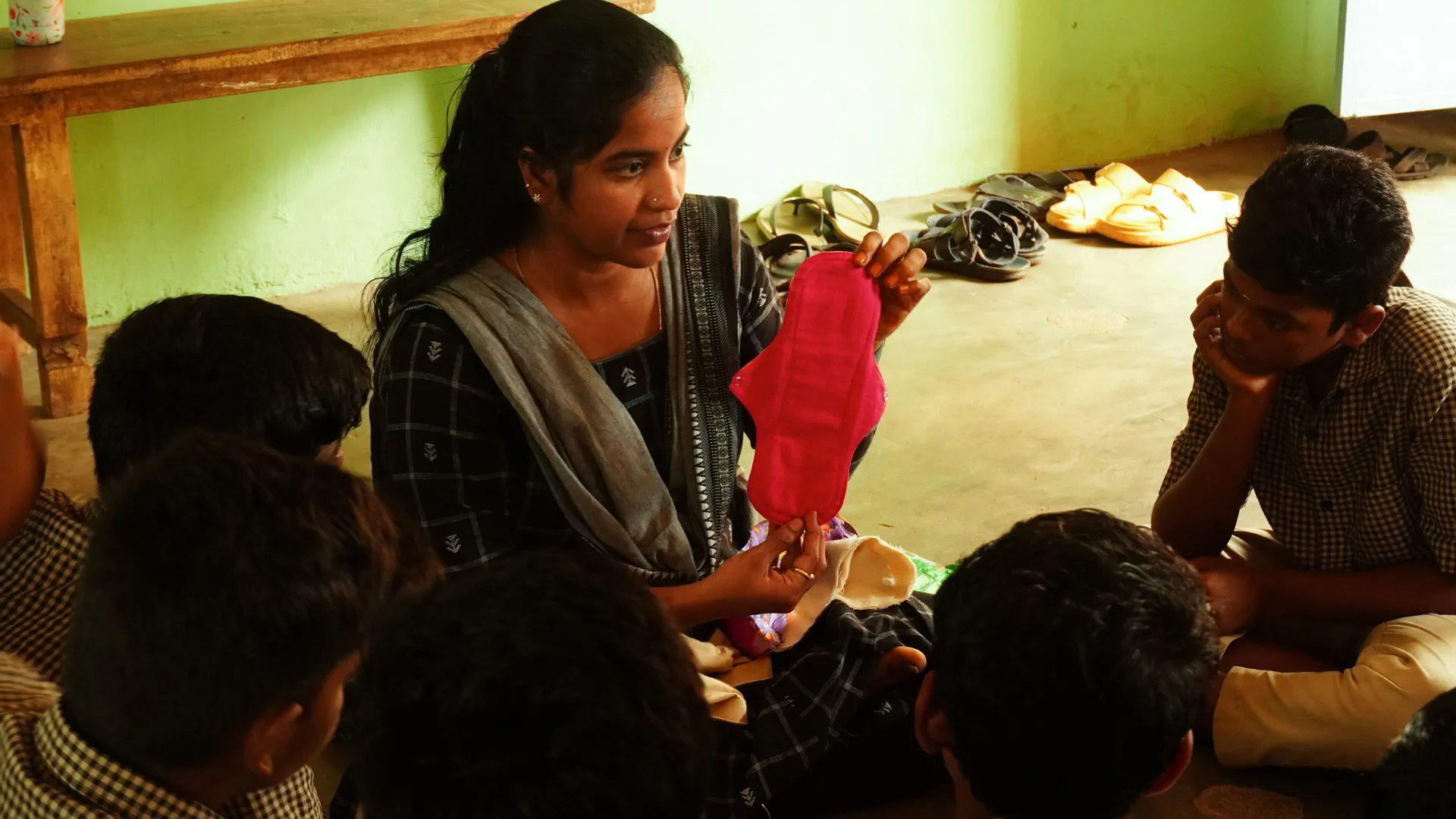
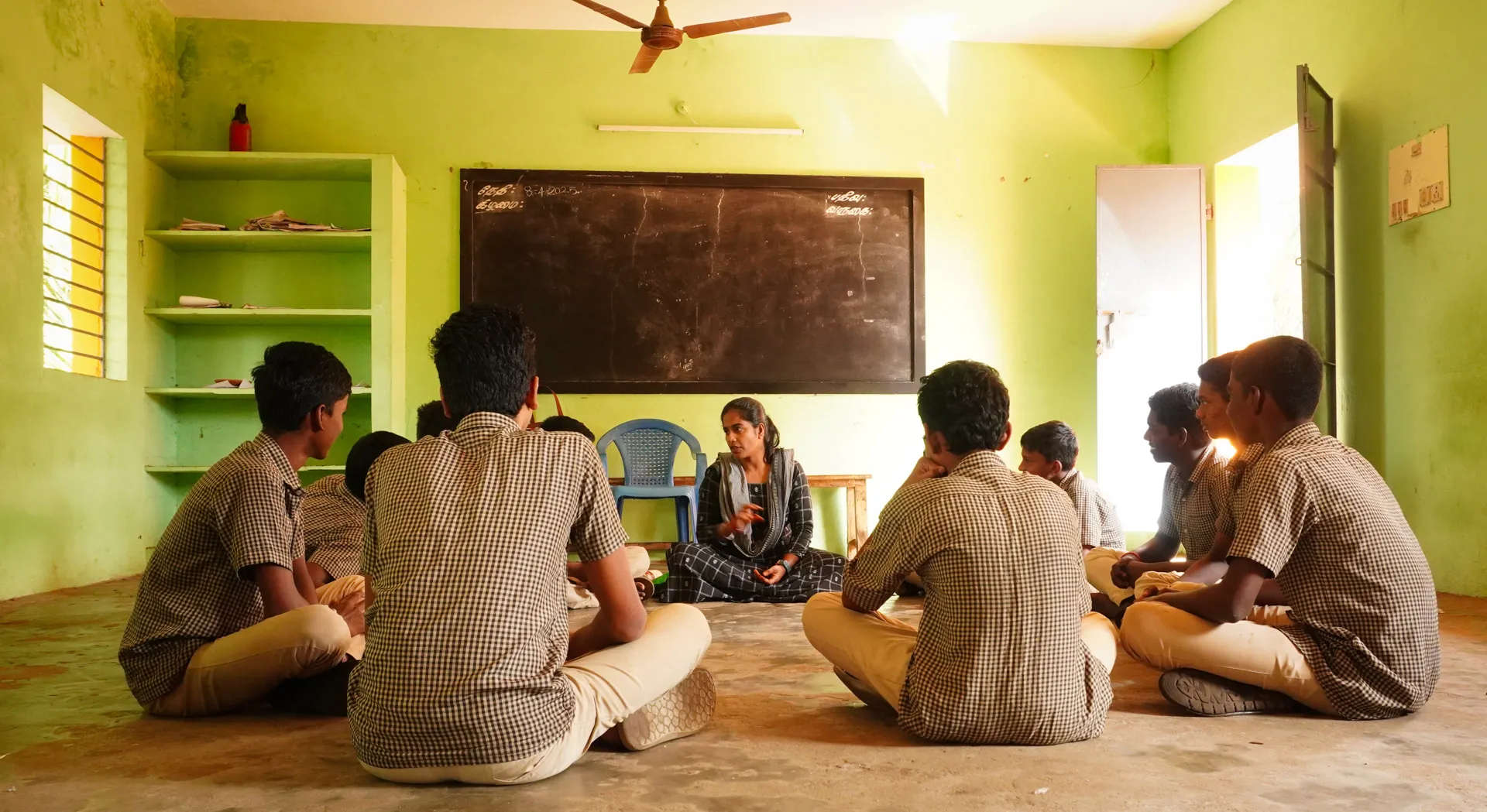
Earlier this year, Kalvi conducted four pilot sessions with boys between approximately 12 and 17 years old in schools where EcoFemme already had trusted relationships through Pad for Pad.
The sessions covered:
- Physical and emotional changes during puberty
- Menstruation and reproductive health
- Gender respect and empathy
- Supportive responses to menstruation-related stigma
- Emotional openness and vulnerability
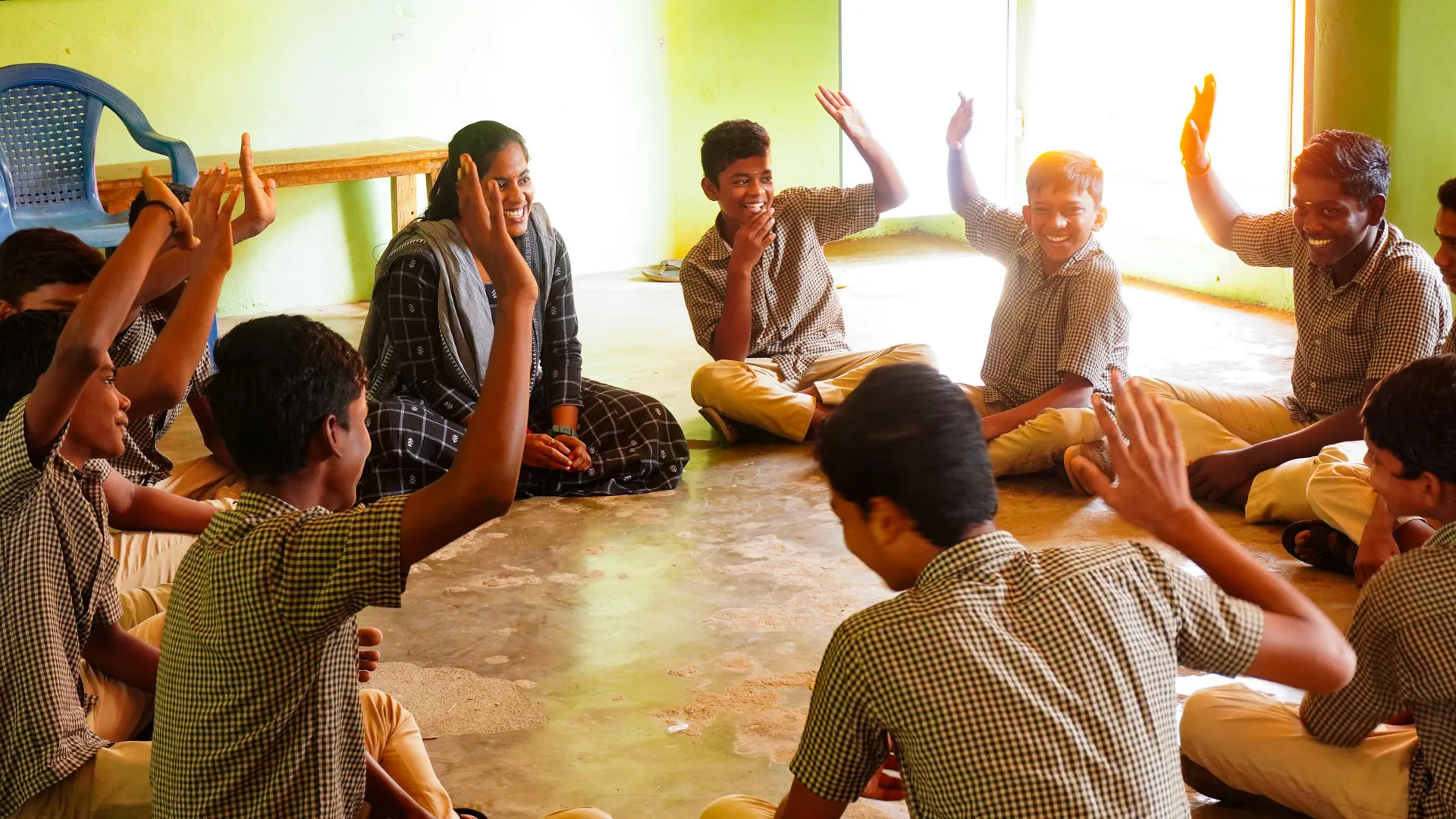
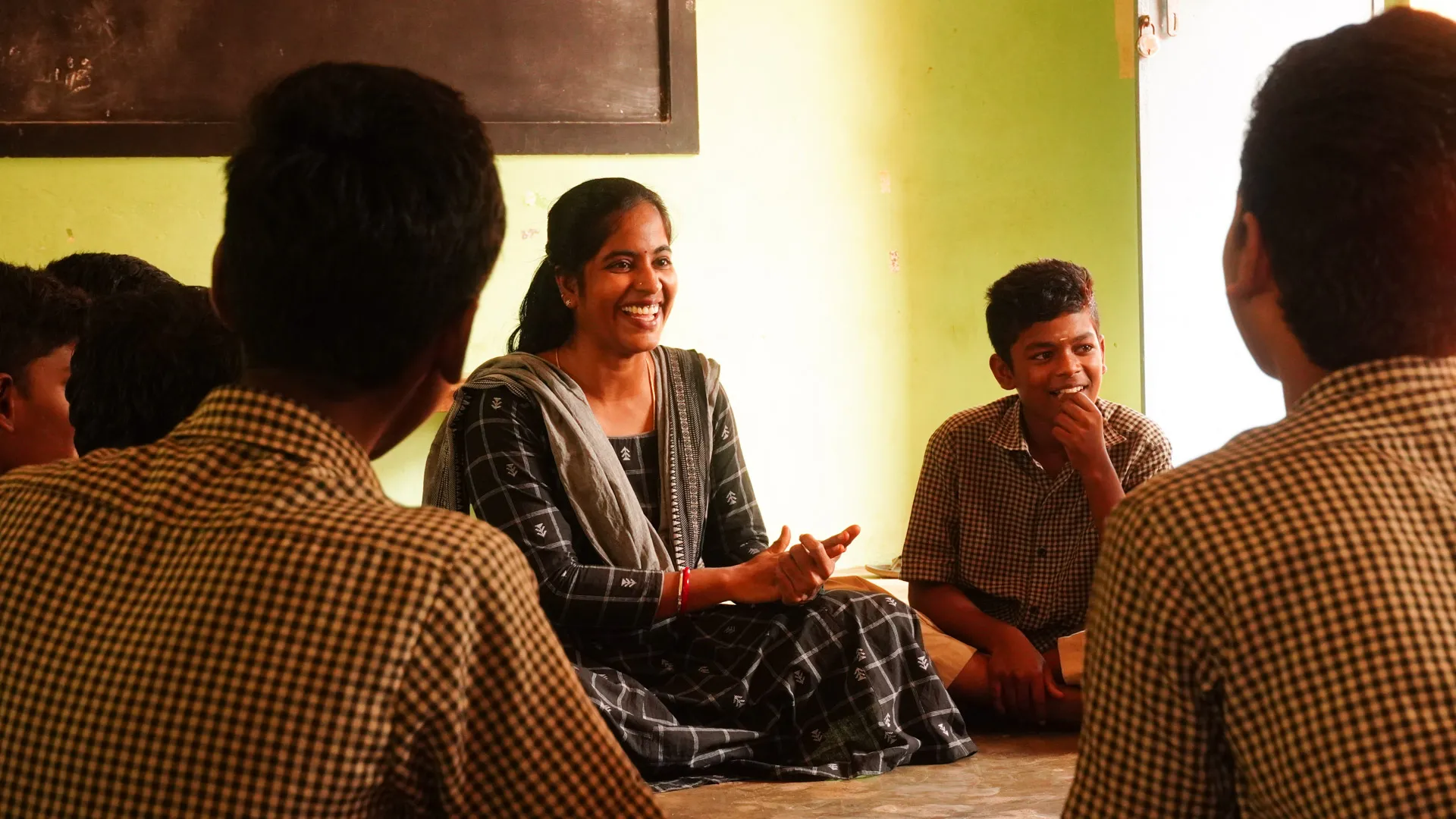
Rather than lecturing students, the program encourages conversation and participation. Sessions begin by creating what Kalvi calls a “safe space,” where boys are encouraged to leave behind shame, embarrassment, and fear of judgment.
“We tell them there are no wrong questions,” she explains.
The response surprised even her.
“They were extremely interested,” she says. “They wanted to understand what girls go through and how they could help.”porting girls — it is essential to it.
Questions Boys Were Afraid to Ask
Many of the boys arrived with almost no reliable information about menstruation.
Some believed menstruation meant continuous urination. Others thought girls had to be hospitalized every month because of blood loss.
One student asked:“Will girls continue getting periods until they die?”
Another wondered why his grandmother no longer used menstrual products. “These questions showed us how much misunderstanding exists,” Kalvi says.
The sessions also opened conversations about the boys’ own experiences with puberty. Students talked openly about acne, voice changes, body hair, attraction, insecurity, and emotional confusion.
At one point during an early session, Kalvi admits she felt shy discussing genital anatomy with the students.
“One boy told me, ‘Akka, we feel comfortable with you. You don’t need to feel shy,’” she recalls with a laugh.
Changing Behavior Inside Schools
The most powerful outcomes appeared after the sessions ended.
During follow-up evaluations, boys reported that they had stopped teasing girls about menstruation. Many said they now understood how embarrassing and isolating that experience could feel.
When asked what they would do if a girl stained her clothes at school, most students said they would help, comfort her, or stop others from bullying her.
For Kalvi, those moments revealed the program’s deeper potential.
“It’s a very small seed we are planting,” she says. “But it can grow in many directions.”
She believes programs like Period Ally can help create healthier relationships, reduce stigma, challenge rigid gender expectations, and encourage boys to become more emotionally aware and compassionate men.
Working Within Cultural and Institutional Barriers
Despite the strong response from students, introducing programs like Period Ally is not always easy.
Kalvi says some school administrators remain uncomfortable discussing puberty and reproductive health openly with students. In previous menstrual education sessions for girls, she has even been stopped by school authorities who believed the information was “too much” for adolescents.
“The problem is not the students,” she says. “The problem is often the system itself.”
Because of these realities, EcoFemme plans to introduce Period Ally alongside the already established Pad for Pad program, which schools already recognize and trust.
Building the Future of Period Ally
The pilot sessions reached approximately 82 boys from two schools formed four groups. Over the next year, EcoFemme hopes to expand the program significantly, potentially reaching 500 to 1,000 boys while continuing to refine its training materials, educational guides, and facilitator resources.
To support this next phase, the organization is currently seeking approximately $4000-5000( 4-5 lakh INR ) in funding for the coming year. The immediate priority is hiring a dedicated coordinator ($3000/year) to help lead and grow the program. Additional support ($1000-2000) will go toward presentation materials, educational resources, facilitator training, and travel costs for conducting sessions in schools across the region.
EcoFemme also hopes to gradually develop a more formal curriculum and facilitator manual that can support future educators working with boys on topics related to puberty, menstruation, emotional well-being, and gender respect.
Kalvi hopes eventually to transition into leading Period Ally full-time while mentoring newer facilitators for the Pad for Pad program.
“For me, this work feels deeply needed,” she says. “Even if we cannot find enough funding immediately, I will still try to reach as many boys as possible.”
Her vision extends far beyond menstrual education alone.
“I dream that Period Ally can help build a healthier society,” she says. “Not only for girls and women, but for boys too.”
READ and Download the Period Ally Pilot Session Report, compiled in March 2026 by Kalvi Karunanithy