
Bala’s Journey
Learning to Meet People
Where They Are
with Polyvagal Trauma Informed Care
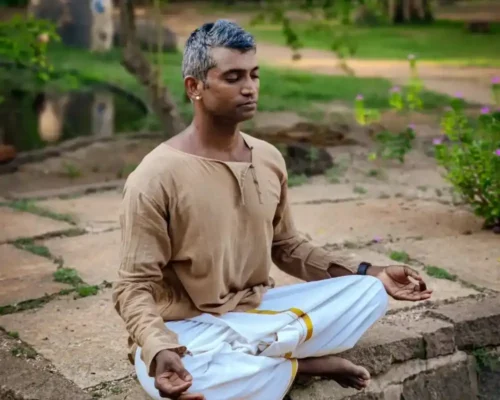
Balaganesh Sivaprakasam—Bala to everyone in Auroville and to his many friends and colleagues—is a master yoga teacher, Kalaripayattu practitioner, wellness coach, and co-manager of MorningStar Birthing Center in Auroville. He has also been a longtime collaborator with AVI USA, working with the organization in different capacities over the years.
This year, an AVI USA scholarship supported Bala in pursuing training in polyvagal theory and trauma-informed care—an area of study that is already finding its way into his work at MorningStar Birthing Center, with fathers, families, and even in the wider Auroville community.
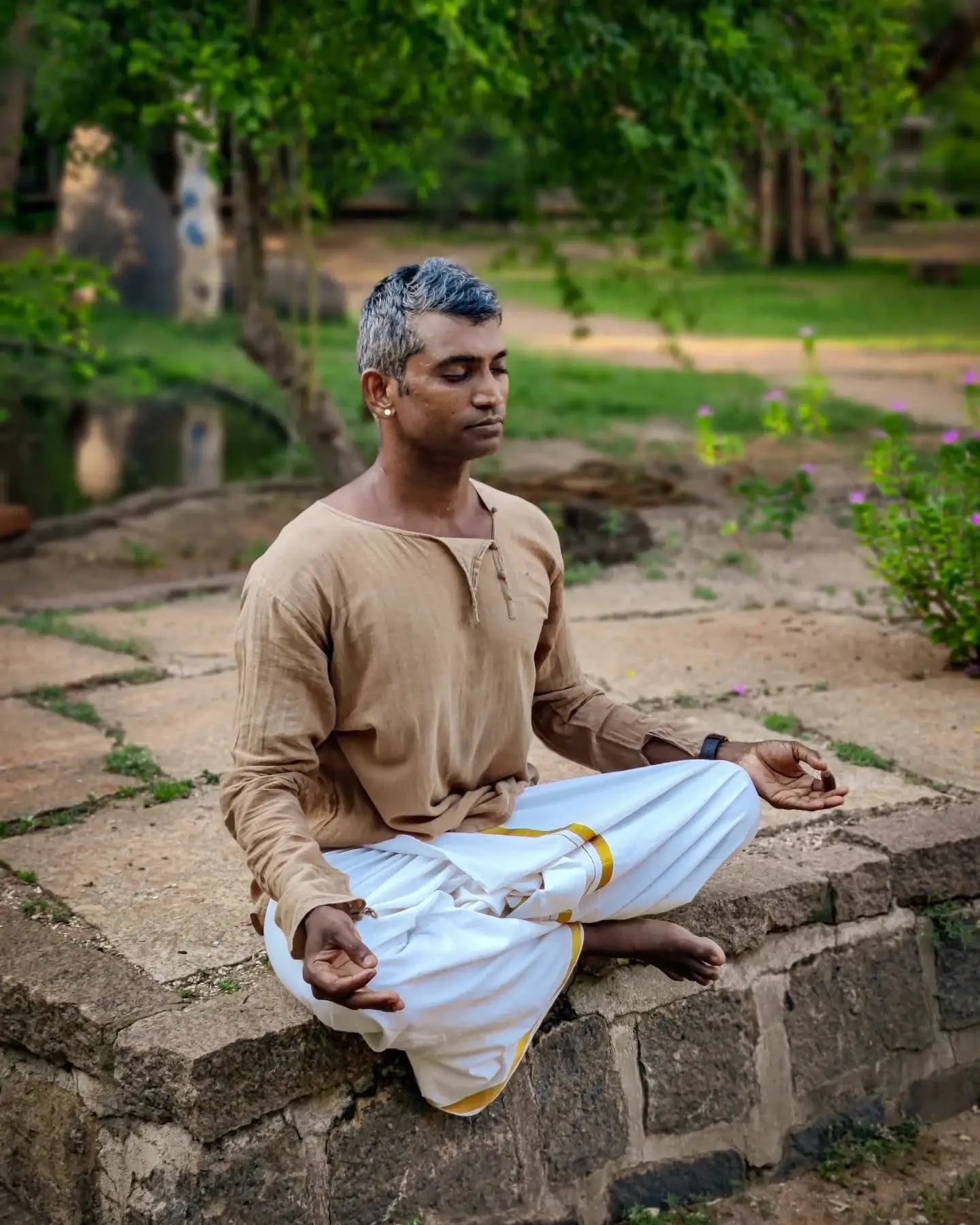
With a background in mechanical engineering and business management, Bala might seem an unlikely person to be studying the nervous system. But his journey through yoga, spirituality, community work and now trauma-informed care reflects something very Auroville: seemingly different paths can come together in unexpected ways.
Bala’s interest in trauma began at a birthing conference in Hyderabad, where he took a course in trauma-informed care. The experience opened up a new field of understanding.
I realized that trauma goes really, really deeper than the surface layer that we are talking about.
Bala
For Bala, the training did not replace what he already knew through yoga and spiritual practice. Instead, it gave him another language for it.
Polyvagal theory offered a way to understand the nervous system’s responses to safety, danger, connection and stress. One of the most meaningful shifts for him was learning to move away from the question, “What’s wrong with you?” and instead ask, “Why are you not feeling safe?”
That change has influenced how he works with others—and with himself.
MEETING PEOPLE WHERE THEY ARE
Bala believes that spirituality can offer something profound: a sense of being held, connected and safe. For someone who is open to a spiritual path, surrender and devotion may provide an intuitive experience of safety that does not require explanation.
But Bala also recognizes that this is not everyone’s doorway.
“Some of them understand things from a scientific perspective,” he says.
This realization has become an important part of his work. If spirituality is not a language someone naturally speaks, there are other ways to reach them. Neuroscience, the nervous system, movement, breathing and other practical tools can provide an entry point.
Bala’s own engineering background helps him understand this. He describes himself as someone who needs to understand how things work. Polyvagal theory allows him to connect the spiritual and scientific perspectives rather than seeing them as competing explanations.
The goal is not to bring everyone into the same worldview. It is to meet people where they are.
WORKING WITH FATHERS
This is particularly important in Bala’s work with fathers at MorningStar.
Every eight weeks, he offers sessions for fathers around pregnancy, birth and family life, while encouraging their partners to participate as well. His work asks men to become more aware of what is happening in their bodies and emotions and how their own regulation affects their families.
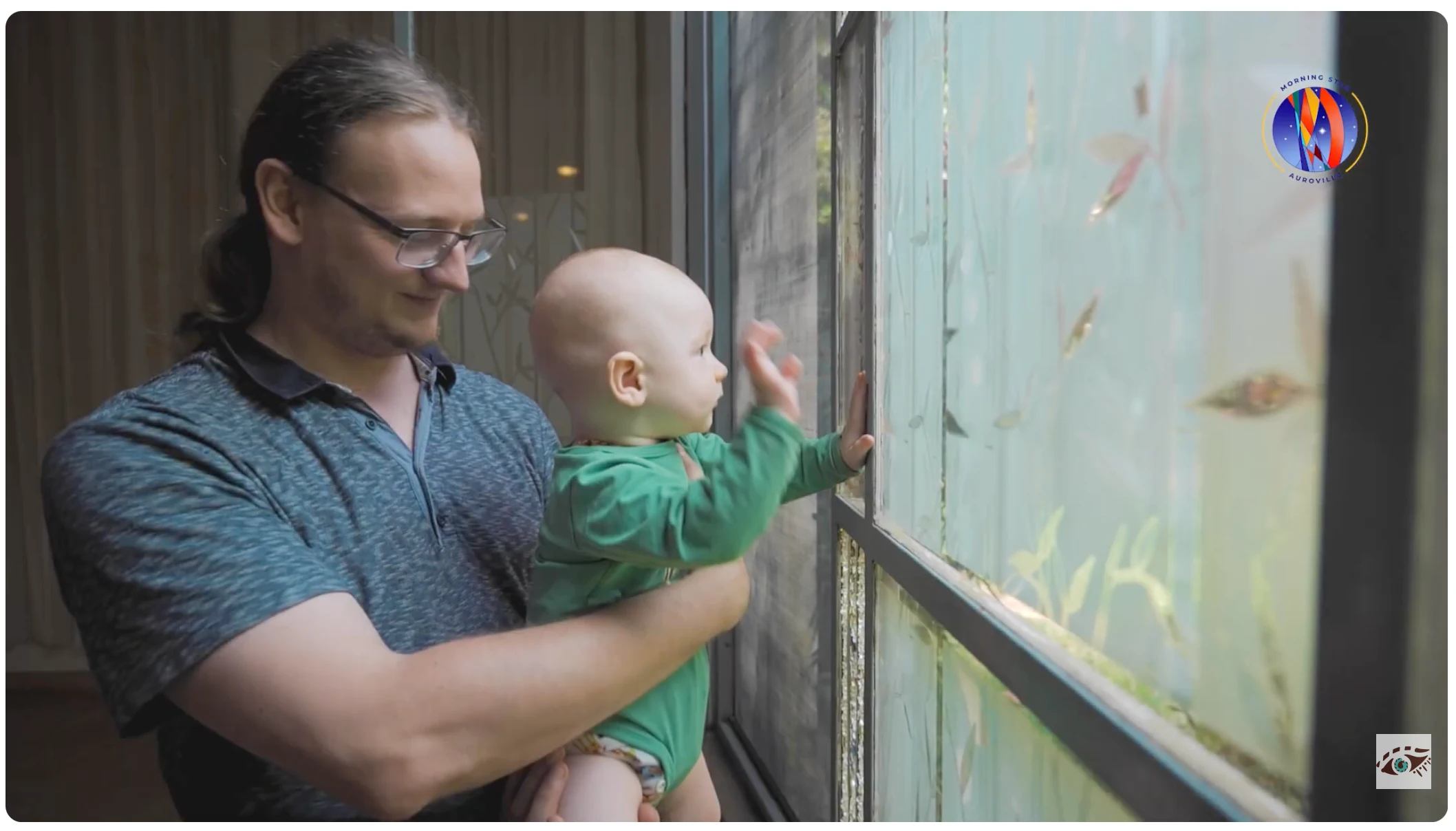
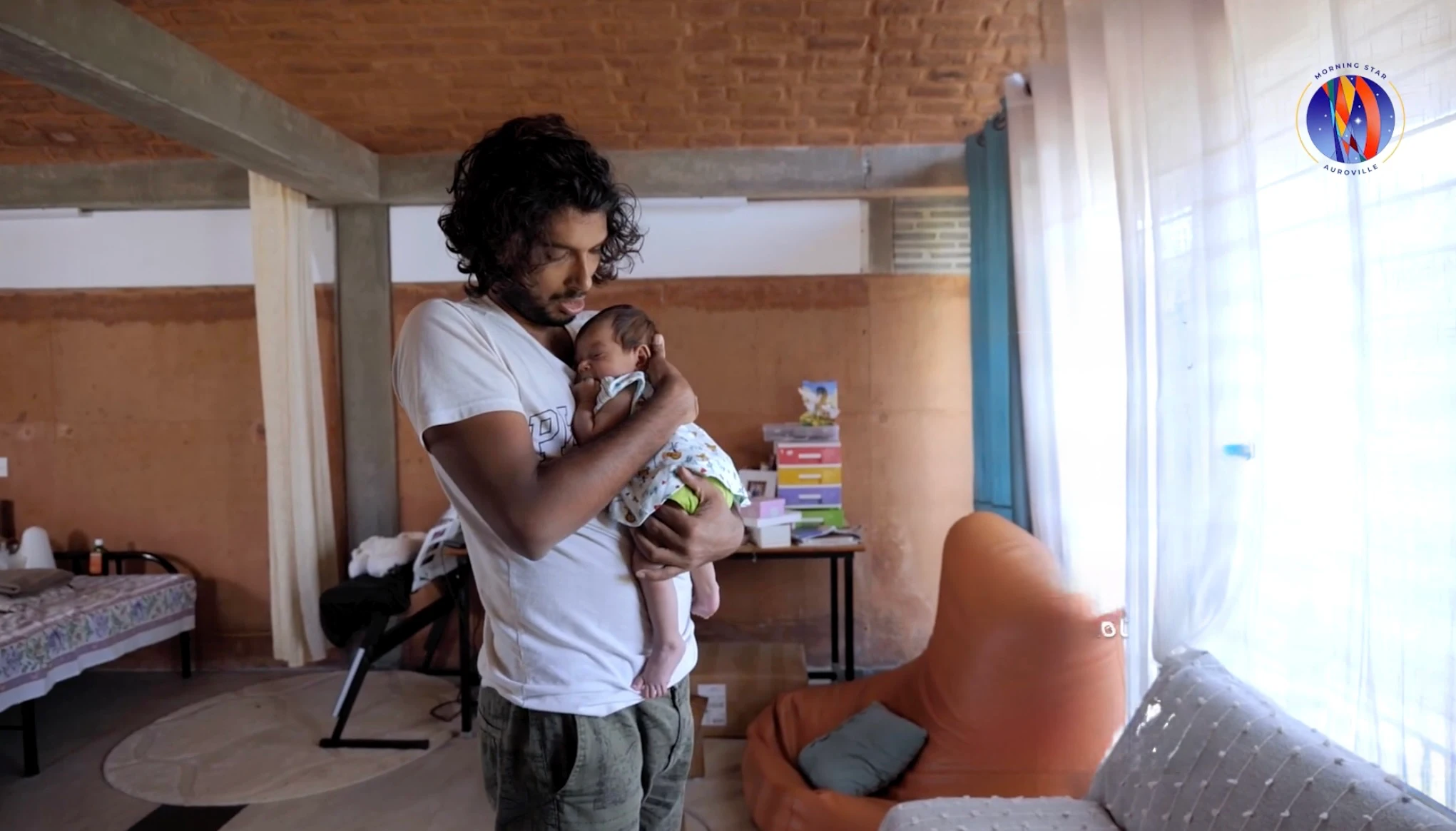
Fathers and babies at MorningStar Birthing Center
For some fathers, talking about spirituality or vulnerability may not be an obvious place to begin. A conversation about the nervous system can be more accessible.
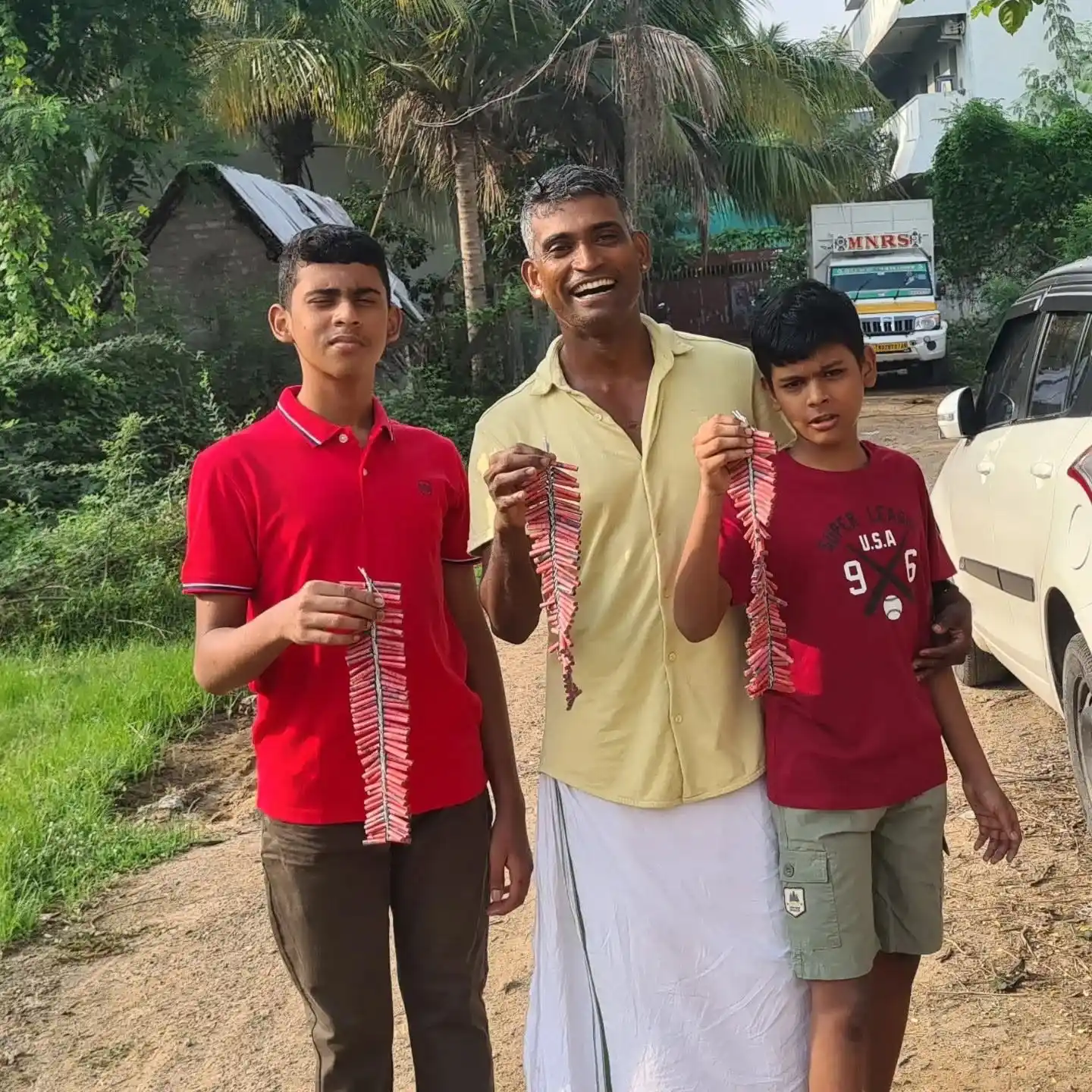
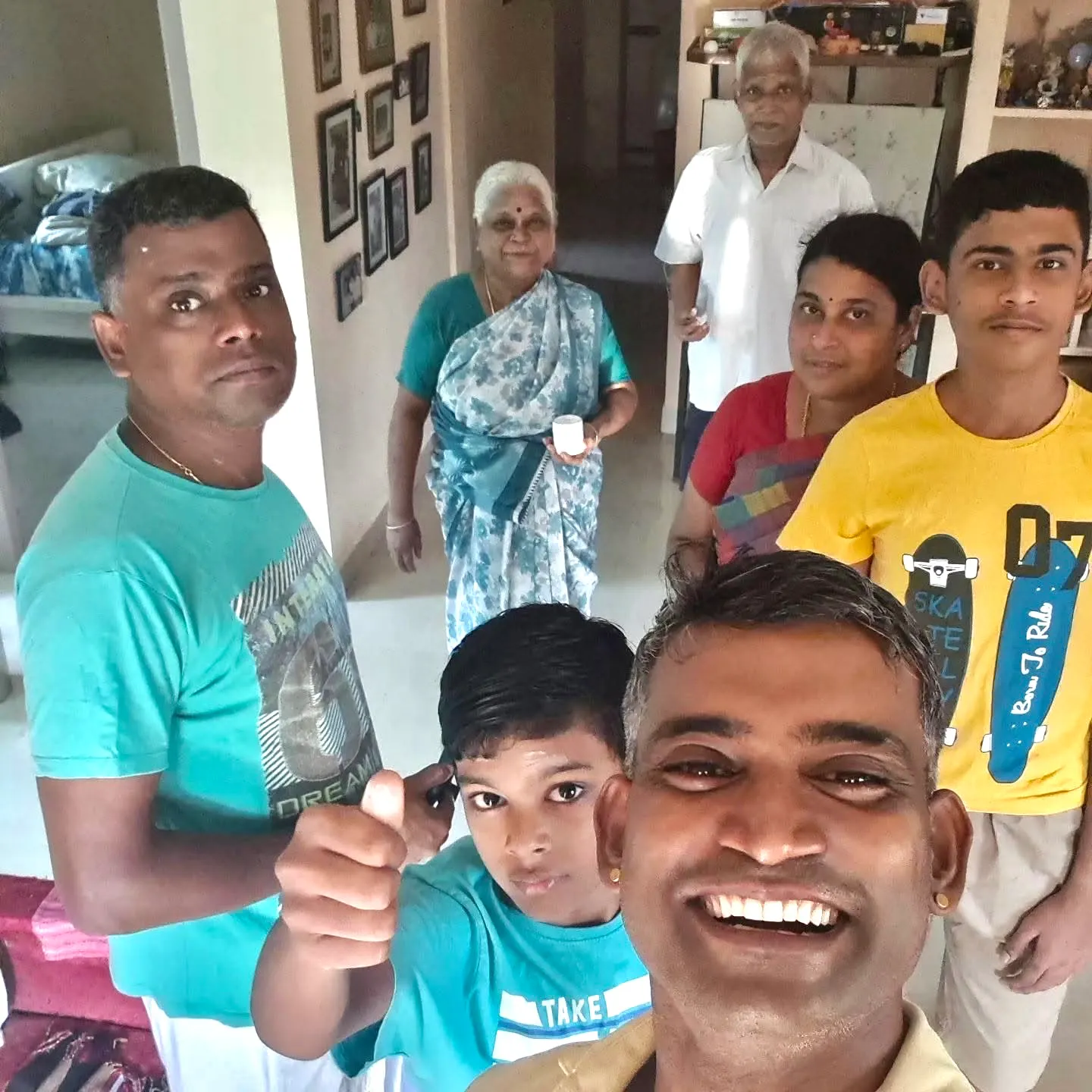
Bala has seen this in his work with Tamil fathers, as well as in his own family.
Bala in community
He remembers telling one father that it was okay to cry. A few days later, after the birth of his child, the man returned and shared what the experience had meant to him.
For Bala, this is where trauma-informed care becomes practical. It is not simply about identifying trauma. It is about creating conditions in which people can experience safety and discover that they have choices in how they respond.
It’s not only to identify. There is also a solution.
Bala
That solution might be movement, breathing, journaling, yoga—or simply having another person present who is able to remain calm and connected.
COMMUNITY AS MEDICINE
The same ideas have changed the way Bala understands Auroville.
One of the modules in his training was called “Community as Medicine.”The phrase immediately resonated with him.
Auroville is a spiritual community, but Bala has begun looking at community not only as a social structure but also as an environment that can affect the nervous system.
He remembers arriving in unfamiliar Auroville communities and being met by people who wanted to help, teach and learn from him. That experience of welcome created a sense of safety and belonging.
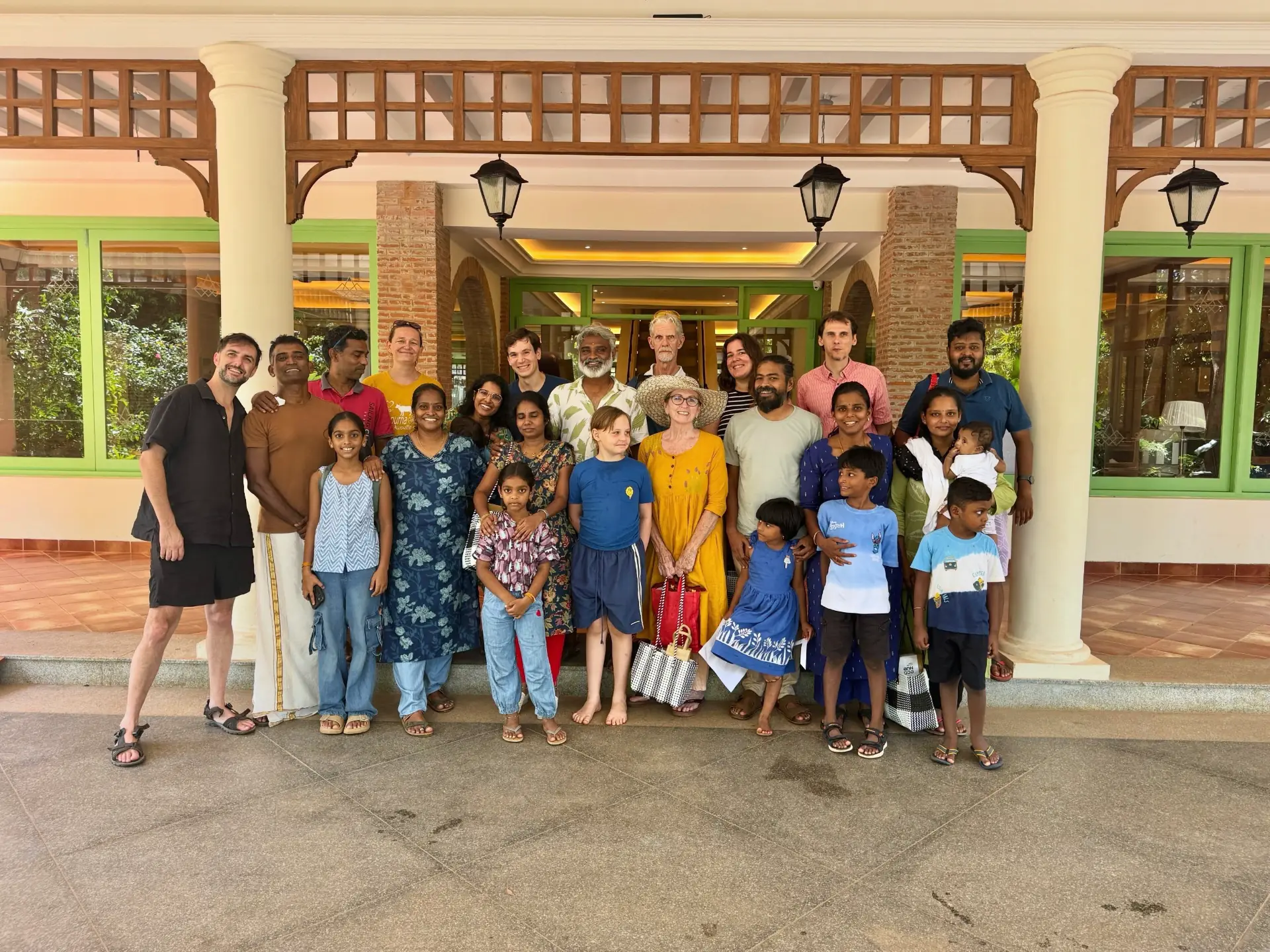
For Bala, this is co-regulation: people helping one another feel safe enough to participate, connect and become part of something larger than themselves.
He now tries to bring that awareness into his own teams. Meetings may begin with intention-setting and a few moments of meditation. He pays attention to how people are feeling and to whether his own state is contributing to a sense of safety.
This is especially meaningful in his work with women on his teams, where cultural expectations and social boundaries can sometimes make open communication difficult. Bala sees his own self-regulation as part of creating an environment where people can speak naturally and without embarrassment.
SCIENCE AS ANOTHER DOORWAY
The scholarship has therefore expanded Bala’s ability to reach people without asking them to become someone they are not.
For a spiritually oriented person, the language of devotion and surrender may already make sense. For another person, the nervous system may be the doorway. For someone else, it may be yoga, movement or simply the experience of being listened to.
Bala sees these not as contradictions but as different ways of approaching the same human need for safety, connection and wellbeing.
His training is also opening possibilities for the future. He hopes to incorporate what he is learning into his yoga teaching and work with fathers and families, and eventually to offer courses or other educational opportunities to a wider community.
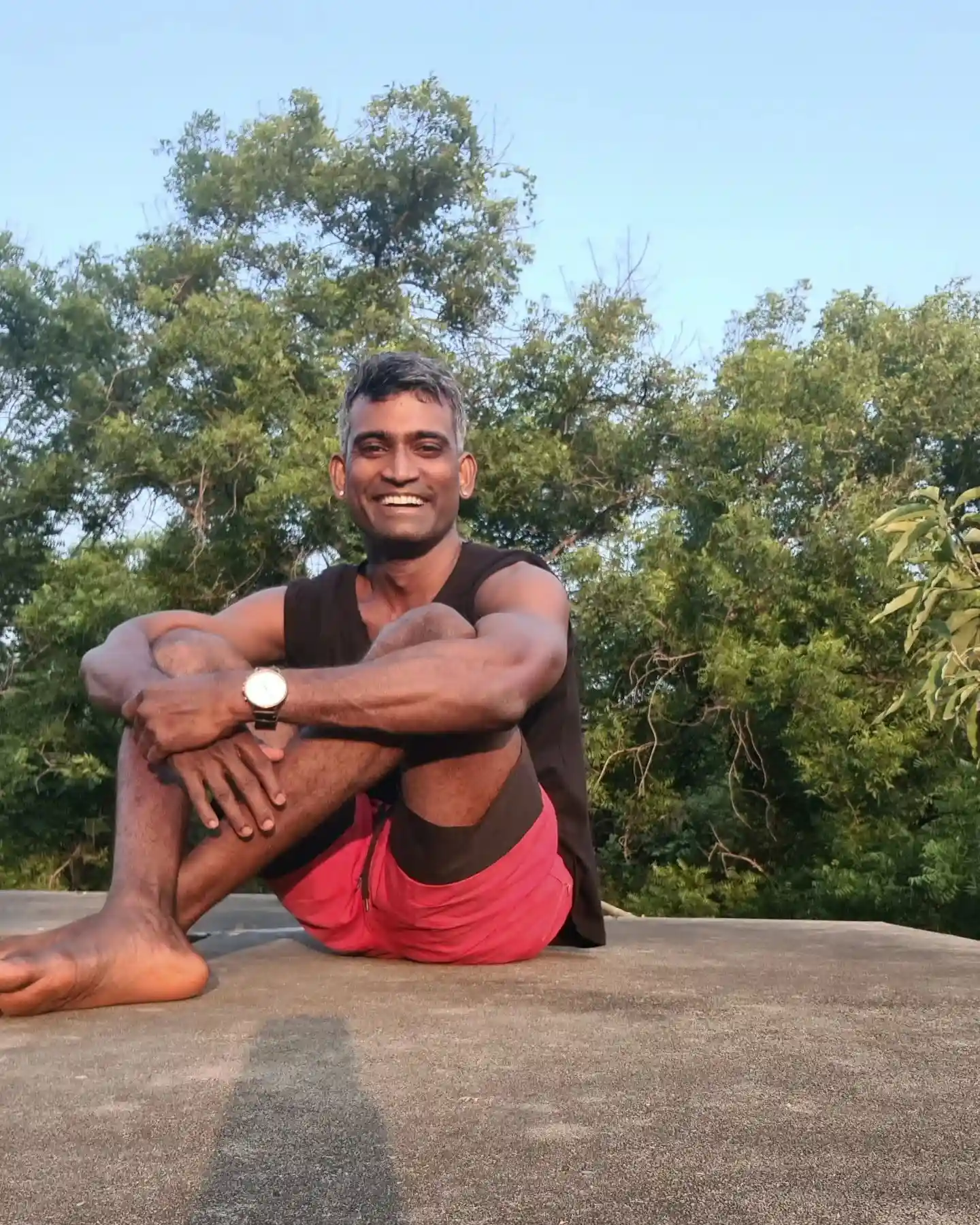
For Bala, this is another expression of what Auroville makes possible: a person does not have to remain defined by the path they started on.
He began with engineering. Yoga brought him into a deeper exploration of the human being. His work with families brought him to trauma-informed care. And the scholarship from AVI USA has helped him add another dimension: the science of the nervous system.
I have to equip myself to go meet them.
Bala
That may be the central thread running through his work: not asking people to come to where you are, but finding the doorway through which they can enter.
In Auroville, that doorway may be spirituality and devotion. For someone else, it may be science. For another, a yoga practice, a conversation, a community—or simply the experience of feeling safe with another human being.
For Bala, all of these can become part of the same work: helping people feel safe enough to connect, heal and discover what is possible within themselves.
Support Scholarships
Help Aurovilians grow the skills their communities need.