
Bringing Project-Based Learning to Rural India
How a week in Delhi is reshaping classrooms from Karnataka to Uttarakhand
The Sri Aurobindo Ashram – Delhi Branch has long held a special place among AVI USA’s collaborators.
Under the leadership of Tara Jauhar — known to everyone simply as Tara Didi — the Delhi Ashram has built a remarkable range of initiatives that carry The Mother and Sri Aurobindo’s vision into daily life: a women’s craft and skill-building program that gives women from surrounding villages a path to livelihood, Awareness Through the Body (ATB) trainings that bring somatic, integral practice to educators, and Mother’s International School, one of India’s most respected schools built on the same educational philosophy. Given the deep and abiding connection between Auroville and the vision of Sri Aurobindo and The Mother, AVI USA is honored to support the Delhi Ashram’s continued work — and this January’s teacher workshop is one more expression of that shared lineage.
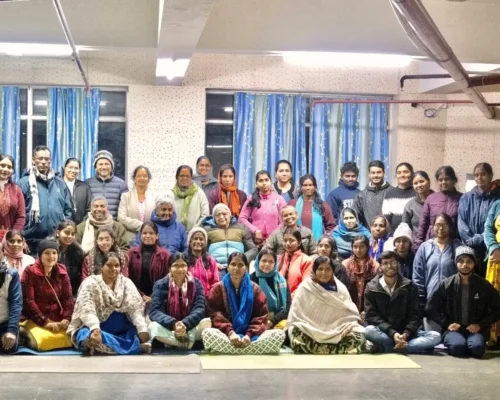
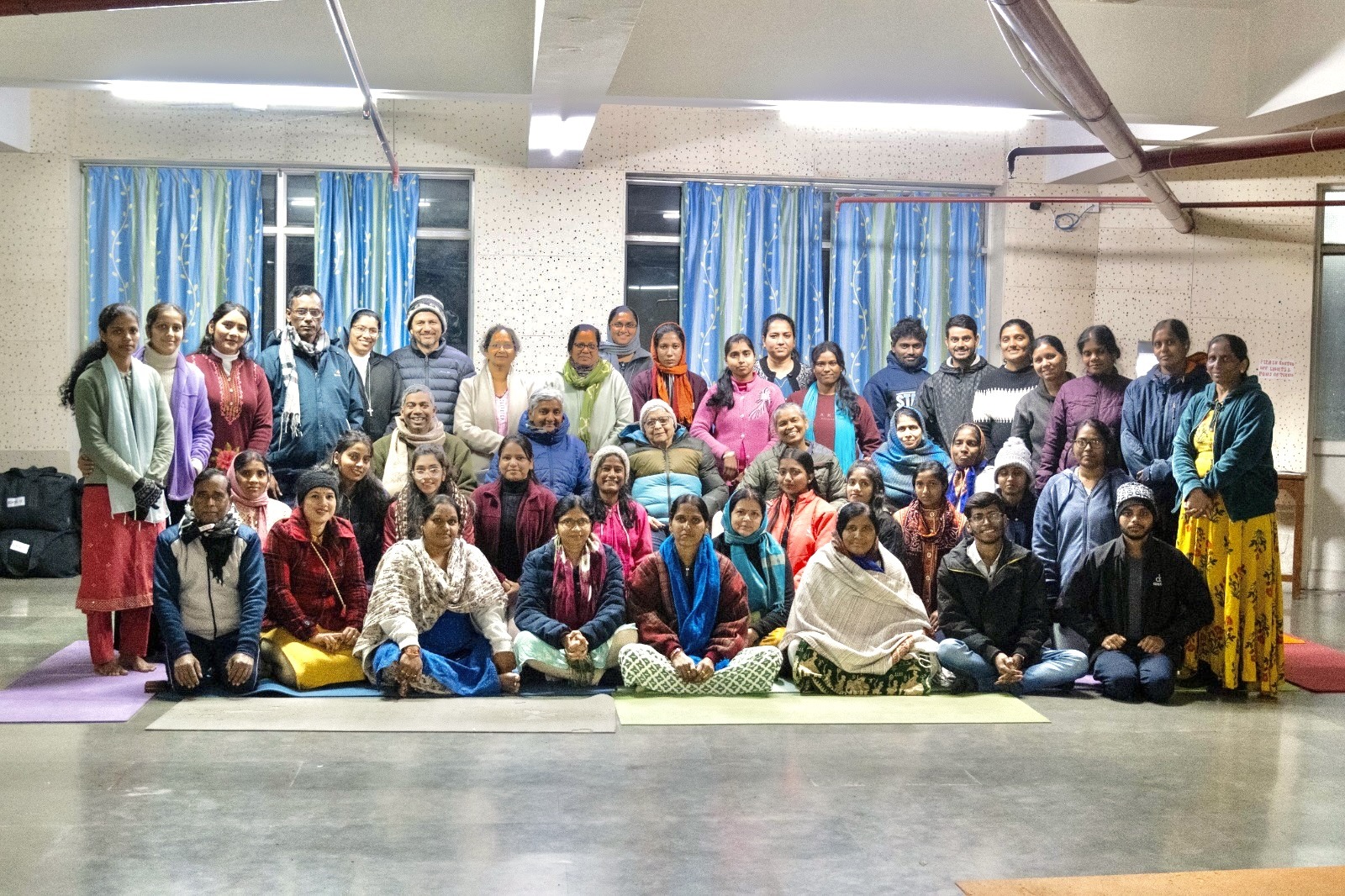
This January, 41 teachers from 15 rural schools across seven states: Telangana, West Bengal, Uttarakhand, Karnataka, Uttar Pradesh, Odisha, and Gujarat converged on the Ashram for a week of hands-on practical training that will inform their teaching in the future.
The occasion was a residential workshop on Project-Based Learning and India’s National Education Policy (NEP) 2020, funded by AVI USA and run by the Ashram’s education team from January 3–10, 2026.
It’s part of the Ashram’s ongoing work with more than 300 rural schools nationwide, helping teachers translate the philosophy of Integral Education — the vision of learning that The Mother and Sri Aurobindo laid out decades before “holistic education” became a policy buzzword — into something a teacher can actually do on a Tuesday morning with thirty children and no budget.
Learning by building, not by watching
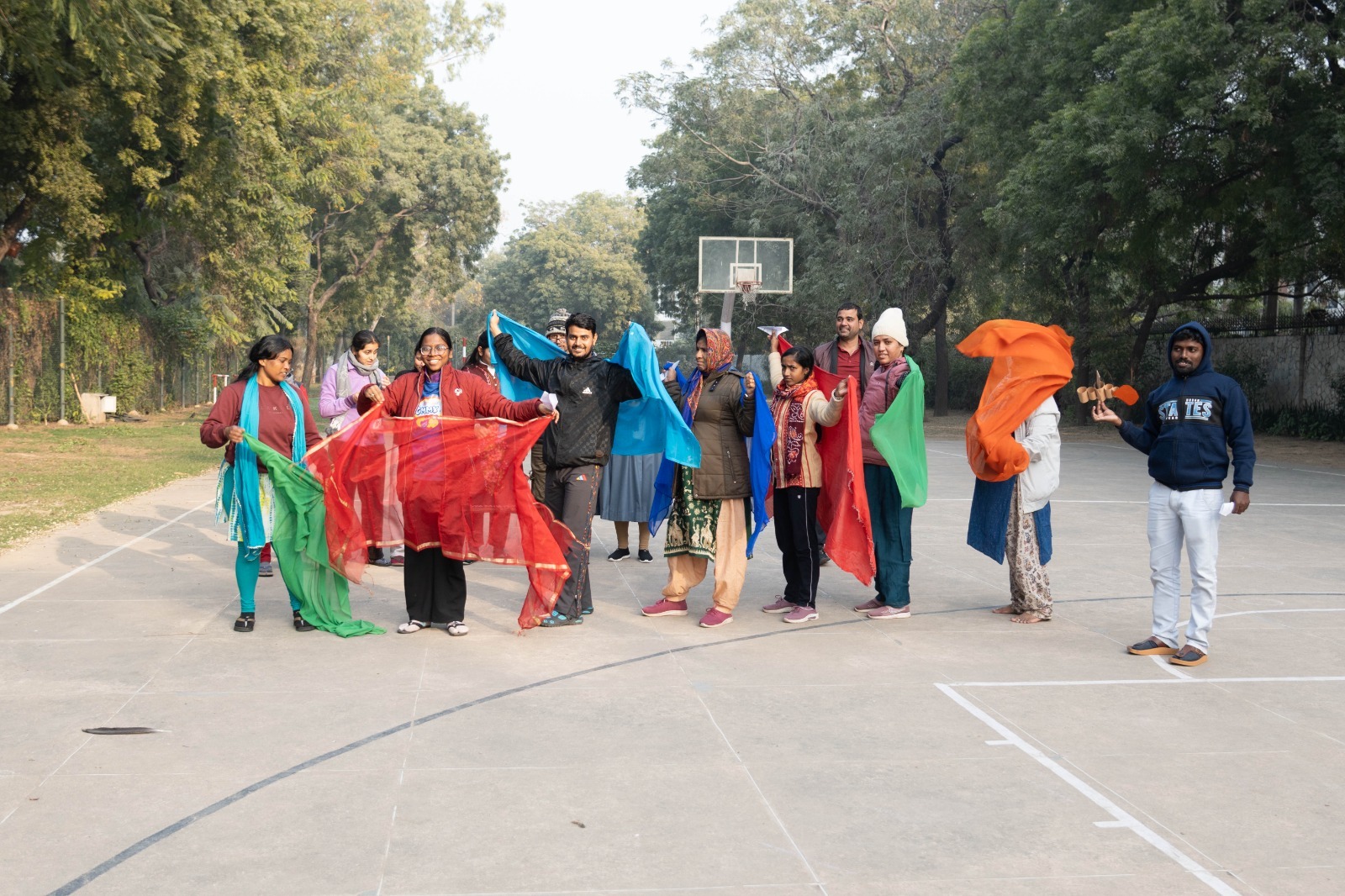
Rather than lecture teachers about project-based learning, the Ashram team designed an interactive process to fully experience the methodology. The entire week’s curriculum revolved around a single live project, “Our Environment,” which every session — Hindi, English, math, science, looped back to.
Teachers split into three groups by the age of the children they teach. The youngest-grade group designed a unit called Thand ki Rani (“Winter Queen”), unpacking the season through food, clothing, and festivals — writing new songs, building flashcards, and staging a puppet skit about a cardboard child named Raju getting dressed for winter. The Class 2–4 group ran a full project on vegetables: 12 teachers brainstormed 19 possible activities, from classification and taste-tests to riddles and puppet shows, then tested games like “Vegetable Salad” and “Change the House” for what each one actually develops in a child.
By the end of the week, every teacher had not just learned the theory of project-based learning but had co-authored a working example of it — one they could hand to a colleague back home.
What “Integral” actually means
The philosophical core of the week came in a session led by Dr. Ramesh Bijlani on Integral Education. He opened with a simple provocation: what does integral mean? Total, the group decided — but total of what?
“Asked whether educating the mind and body would be enough, participants quickly agreed it would not. What was missing, they concluded, was the soul.”
Dr. Bijlani distinguished this from value or moral education, which he described as often amounting to sermonizing — something a child can recite correctly without ever living by it. Integral education, by contrast, centers the psychic being, described in the session as the soul’s dynamic, growing part — the quiet inner sense that guides a child’s decisions long before any rule is enforced from outside.
He illustrated the idea with the story of a child, Kavya, deciding whether to keep a hair clip she found on the floor or return it to its owner. When she eventually confesses to her teacher, the teacher doesn’t scold her — a moment Dr. Bijlani tied to what he called The Mother’s Golden Rule:
“A fault confessed should not be punished.”
The point, as the session framed it: psychic education isn’t a subject on a timetable. It has no exam and no rigid method. It’s taught through the teacher’s own example, through stories, and through the right question asked at the right moment — with the psychic being not one more subject to cover, but the pivot the rest of education turns around.
A week that lived what it taught
The schedule itself modeled the philosophy. Mornings opened with yogasana and chanting; each day paired a project session with a subject lesson tied to it; evenings closed with reflection and songs. Teachers built an abacus lesson one afternoon and ran atmosphere experiments with a globe and chalkboard the next. On the final full day, a science lab session gave way to report writing and a valedictory ceremony where teachers shared, often emotionally, what they were carrying home.
For Vandemataram Padmarani Presingu, academic coordinator at Sri Aurobindo’s School in Gaddipally, Telangana, the week reframed what she thought she already knew about teaching:
“The first and foremost thing which I learnt is how we must very clearly know the objective of whatever we are facilitating… how one can touch the inner being. This was amazing.”
She also named what she was bringing back for herself, not just her classroom — an intention to be more patient, and to pause before reacting.
What goes home with them
AVI USA’s support didn’t end when the week did. The funding sent by AVI USA provided each of the 15 schools left with a full teaching kit — 34 items including pulley and lever models, a solar system model, abacuses, a robotics kit, lens and mirror sets, and basic chemistry supplies — alongside a set of books, so the ideas from the workshop have something to run on once teachers are back in their own classrooms.
The week closed, fittingly, at Delhi’s own monuments — Qutub Minar, Lotus Temple, India Gate, Akshardham — a chance for teachers who spend their days teaching Indian history and heritage to stand inside it themselves before the long trip home.
This workshop was made possible through the ongoing partnership between AVI USA and the Sri Aurobindo Ashram – Delhi Branch Trust Society, part of AVI USA’s continued support for Integral Education initiatives across India.