
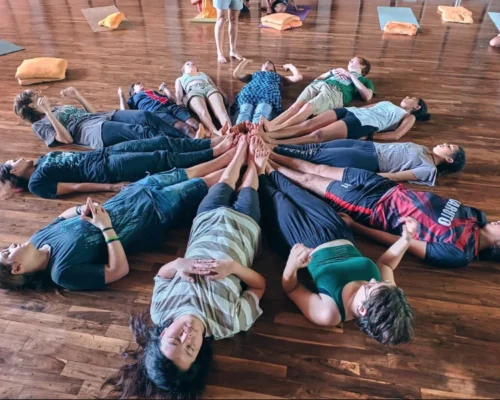
Towards Integral Education
through Free Progress
by Deepti Tiwari and Jean-Yves Lung
Last School in Auroville is an ongoing educational experiment rooted in Free Progress learning and Integral Education, as envisioned by The Mother and Sri Aurobindo.
A unit of the Sri Aurobindo International Institute of Educational Research (SAIIER), the school understands education not simply as the transmission of information, but as a living process of becoming through inner discovery and self-determination.
A New Creation
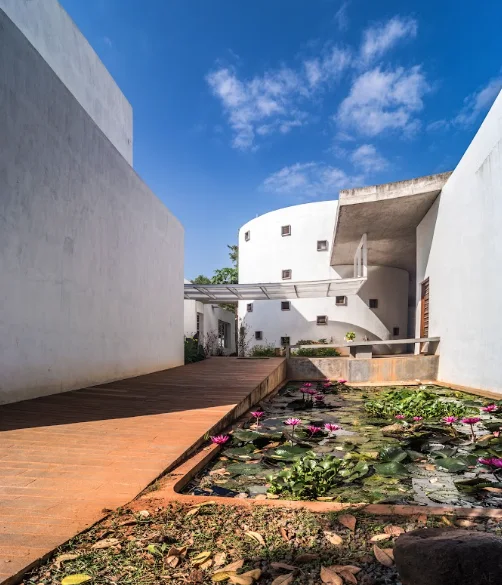
The school offers an environment of beauty, where students ask their own questions and approach learning outside the constraints of traditional academic programs or external standards.
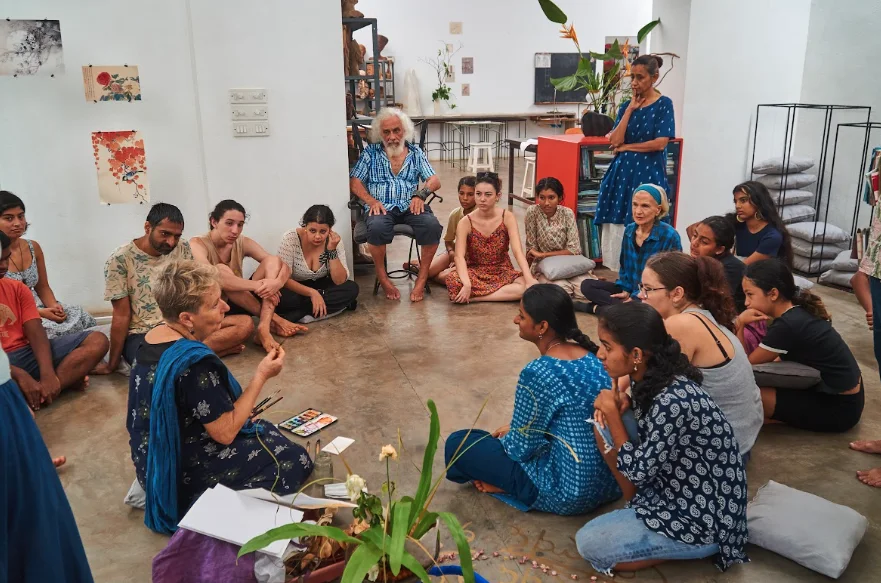
Last School’s aim is the growth of consciousness. It could be described as a place where all adults and young people inhabit a satsanga of learning and evolving together.
“If the growth of consciousness were considered as the principal goal of life, many difficulties would find their solution.”
The Mother
Free Progress is the educational philosophy at the heart of Last School — a way of growth that embraces education as self-discovery and conscious learning, guided by inner aspiration rather than external criteria or predetermined outcomes.
Asked to define what she meant by the term ‘free progress’, The Mother said:
“A progress guided by the soul and not subjected to habits, conventions or preconceived ideas.”
Stepping firmly away from formal diplomas, Last School seeks to develop individuals who are better equipped to address tomorrow’s complex challenges, invent new solutions, and contribute to an evolving society, rather than simply becoming part of the existing one.
Free Progress, a psychological rather than an academic approach
The aim is not freedom for its own sake, but progress — and progress needs freedom to be effective. Students must be able to discover and follow their own lines of development. The question is what makes this freedom purposeful and progress-oriented.
But what keeps this freedom progress-oriented?
“It is not a number that we want — it is a selection; it is not brilliant students that we want, it is living souls.”
The Mother
One answer lies in the living presence of aspiration within the teaching team and, through it, in the school’s atmosphere. Teaching here cannot be understood simply as a job performed for remuneration; it calls for a shared commitment to learning and inner progress, and is offered as an offering to a higher and truer life.
The measures are subjective, such as the child’s sense of well-being, and the gladness with which a child comes to school is one significant measure.
Voices from Last School
“Last School didn’t just teach me subjects; it taught me how to be free in myself — how to make choices with clarity and stand by them.”
Last School alumni, age 21
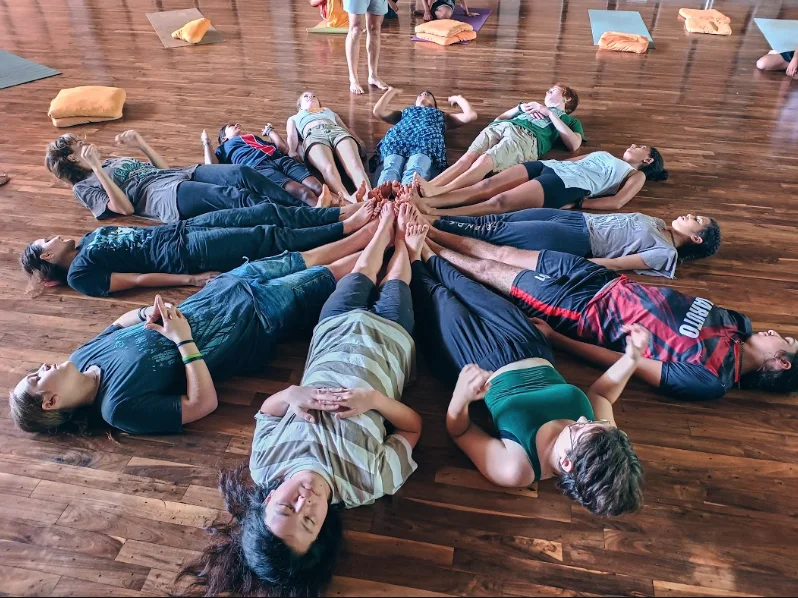
Each instrument of nature – mind, life and body – must be encouraged to grow and manifest its unique capacities. For the body, this is a balanced and stable strength, agility, endurance and beauty. The life spirit, the vital nature of the being, and the seat of its enthusiasm, energy, effort, and courage are also the source of most of the difficulties that vex human nature. This aspect of the instrumental nature is perilous to ignore. Yet, few modern systems address it consciously.
“I didn’t know learning could feel like discovering myself. I thought school was supposed to make me fit into something. Here, I feel like I’m unfolding into who I actually am.”
Student, Last School
Therefore, as Sri Aurobindo argues, the awakening and development of both the Aesthetic as well as the Ethical personality presided over by a developed Reason are essential for the fullness of self-expression.
“Last School gave me the confidence to ask questions — the kind that actually matter. It never taught me to hide behind memorized answers. Instead, it taught me to trust my voice, to express myself clearly, and to hold my own in the world, whether in a classroom, a workplace, or just within my relationships.”
Last School alumni, age 22
The Last School Semester Workshops
Last School Workshops are created to nourish in the students and the teachers a sense of wonder for whatever the chosen theme is. The wish is to shift the objective worldview that humanity presently inhabits towards a more inward, subjective whole-view of all aspects of material manifestation as a living embodiment of the spirit. These workshops, organised to explore myriad themes and approaches to human creativity, provide a unique opportunity for students and teachers to become co-learners in a concentrated atmosphere where the ‘learnings’ happen on numerous levels of the being.
The aim is not to be the best, but rather to find within one’s psychological nature a position of well-being that creates an inwardness of growth and progress. There is no age or limit for such learning. As an example and illustration, here is a short description of one of the previous workshops:
In preparation for the workshop, an environmental installation to stimulate the question was created with an exhibition of images of contemporary glass works which lined the corridor walls. Blue, gold and white paper butterflies fluttered by the hundreds in the school. And haiku punctuated this explosion of life.
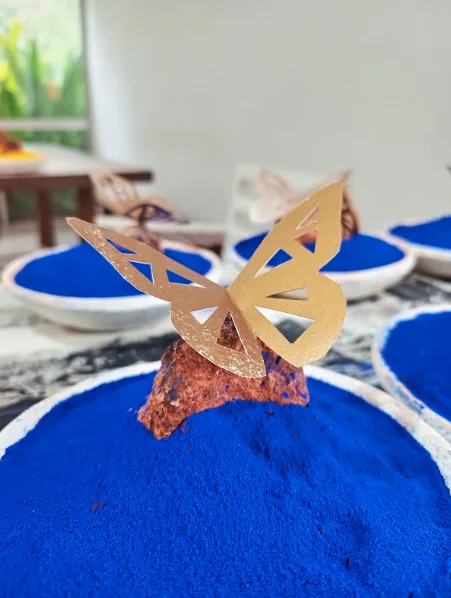
“Immersed in tiny squares, we breathed into the vast.”
A student at workshop on patterns in the self and surroundings
Art is valued at Last School as a way of awakening perception, concentration and a sense of beauty in matter. But the school is not an art school; the intention is to develop a discipline — a tapasya of beauty — and to renew life’s energies through harmony and beauty.
Art – as a tapasya of beauty – Painting & Multi-media – Performance Arts – Digital Arts – Clay – Tinkering & Prototyping – Humanities – Poetry, Historical & Imaginative Literature – Creative Writing – Languages – Tamil – Sanskrit – French – Spanish – Portuguese – Italian – Russian – Hindi – Physical Education – Treks – Gym – Bodywork – Team Sports – Science – Life Sciences & Entomology – Physics & Chemistry – Mathematics – Imagination – Psychology – Society and Culture – History – Culture Studies – Philosophy – Life – Ethics – Inner Discovery – Purpose & Meaning
The Triple Challenge Framework
The Triple Challenge Framework supports the development of the whole person, extending beyond academic achievement to include self-mastery and contribution to the community. Each student chooses challenges in three domains: the physical, the vital and the mental.
- Physical Developing resilience, discipline and a connection with the body through activities such as endurance sports, physical education or community-building.
- Vital Awakening enthusiasm, courage and the will to meet the future, while developing the capacities for harmony, exchange, cooperation and mutuality through art, music, poetry and other artistic disciplines.
- Mental Developing clarity of thought and expression, insight and intellectual growth through academic challenges, philosophical inquiry and creative problem-solving. At a more advanced level, attention is given not only to critical thinking but also to synthetic thinking, exemplified in the works of Sri Aurobindo.
Each challenge is organised around the student’s highest aspiration. The aim is not merely to acquire competencies, but to develop qualities of being and becoming.
Psychic Education and the Fourfold Personality
The framework also draws on what Sri Aurobindo describes as the fourfold personality, or fourfold soul-force, whose powers are to be awakened and developed:
The vast soul of knowledge
The heroic soul of power
The generous soul of harmony and mutual exchange
The soul of perfection and service
These powers are present in everyone in different proportions and combinations, and each is necessary for the full expression of the others. Their development can help students pursue their higher aspirations while contributing to the wider collective well-being.
Contents, Methodologies and Instruments of the Free Progress Approach
Last School has no rules, but a few conditions.
- A full and balanced timetable: Students engage in all aspects of learning that foster a skilled, harmonious, well-developed and grounded psychological nature.
- A wide range of subjects: Sciences, Mathematics, Languages, Literature, Poetry, Philosophy, History, Geography, Cultural Studies, Filmmaking and Computer Literacy.
- Creative self-development: Last School gives great importance to creative self-development toward an awakened aesthetic sense with a love of beauty: art, painting, graphic design, clay work, woodwork, metal work.
- A sense of service: Young persons are encouraged to offer their time and talents to some collective service or action as a measure of self-giving.
- A structured day: School runs from 8 am to 3:30 pm, followed by a choice of physical activities, sports and more.
- Assessment: Development is explored through individual interviews and conversations. As a small school, Last School observes each child with conscious intention. Measures are subjective, including the child’s sense of well-being and the gladness with which they come to school.
- Teacher–student relationships: These are crucial to the learning process. Teachers are encouraged to be wise friends, guides and helpers rather than mere pedagogues.
- Self-direction and choice: Last School works best for young people who have an awakened sense of self-direction and can make conscious choices. Other options are available for those who prefer a certification-based system.
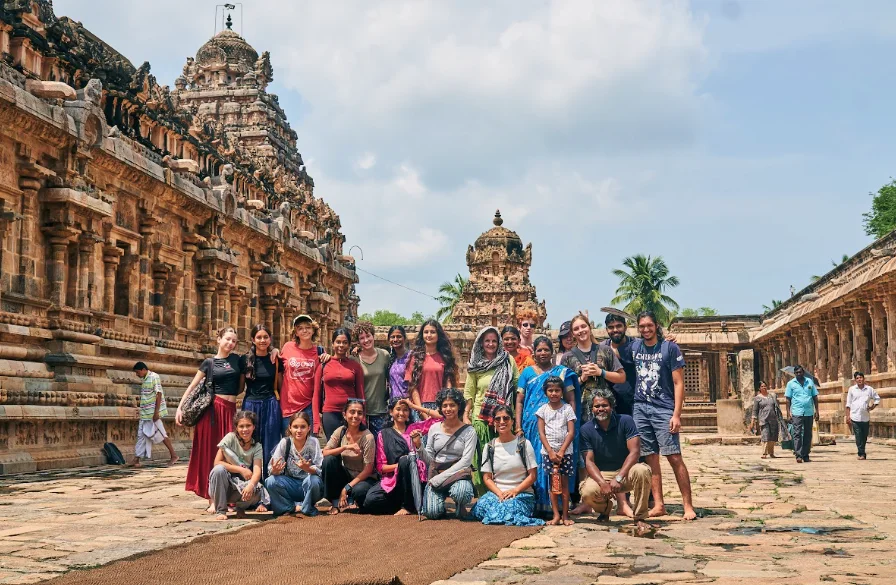
Within the aim of education in Auroville, The Mother said in a conversation about Auroville:
“I want to insist on the fact that it will be an experiment; it is for making experiments, research, study.”
In a free progress approach, the artificial pressures that are generated by the need to be successful in certificate and exam systems are removed. It becomes thus most important to awaken a fundamental commitment to the joy of progress. The key is to create a ‘right road’ that leads the students towards their own perfection. It is not only the head but the enthusiasm of the heart that is required. An academic approach does not work. The need is to take into account the psychological nature of the student.
“If I didn’t have courage to leave the conventional path, maybe my daughter would not have found herself — so every day I thank Last School for giving her the space to blossom.”
Parent of Last School student
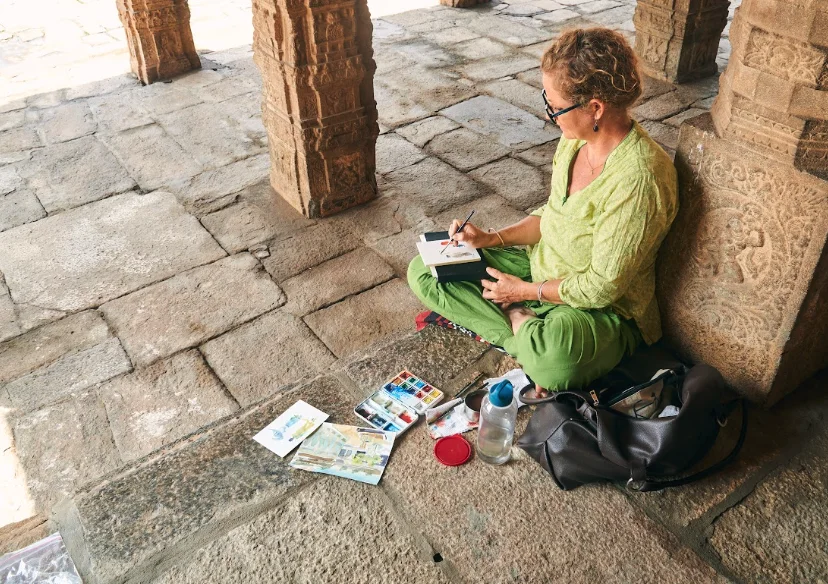
Parents and alumni
“What touched me most was realizing that here, my learning was not something given to me — it was something I had to stand up and take. The moment I understood that, everything changed. I stopped waiting for someone to teach me and started asking myself who I want to become.”
Alumni, Last School
“This education may seem broad and open, but what I see is a way of being that equips the child with acceptance, reflection, and a grounded sense of self — and those are lifelong competencies no exam can measure.”
Parent of Last School student
What did The Mother imply when she spoke of the education she sought as progress guided by the soul and not subjected to habits, conventions and preconceived ideas?
“We are not here to do (only a little better) what the others do. We are here to do what the others cannot do because they do not have the idea that it can be done. We are here to open the way of the Future to children who belong to the Future. Anything else is not worth the trouble and not worthy of Sri Aurobindo’s help.”
The Mother
Editorial collaboration: Chetana Deorah
Photo credits: Ashwin Ezhumalai
Discover Last School
Visit the Last School website → Subscribe to the Last School newsletter → Watch on YouTube → info@lastschool-auroville.org →Invest in Free Progress learning and support Last School, where learning is guided by inner discovery. Gifts through AVI USA are tax-deductible in the US.